South-South Cooperation: How Solutions Travel
What if a solution that works in one country could work in another?
That question is the premise of South-South cooperation. On 12 September, the United Nations marks the day set aside for it.
Here is what it looks like in 2026: three solutions that travelled, and three countries turning that exchange into permanent practice.
What is South-South Cooperation?
South-South cooperation is the practice of countries in the Global South sharing knowledge, skills and proven solutions with one another to tackle common challenges. Expertise moves between countries facing similar constraints, comparable climates, or institutions, which is much of why the solutions transfer well.
What Does South-South Cooperation Look Like in Practice?
South-South looks like a Chinese agricultural expert standing in a Ugandan rice field, or a water-testing method from rural India being taught in a Miskito village in Honduras.
Uganda and China: Agricultural Techniques
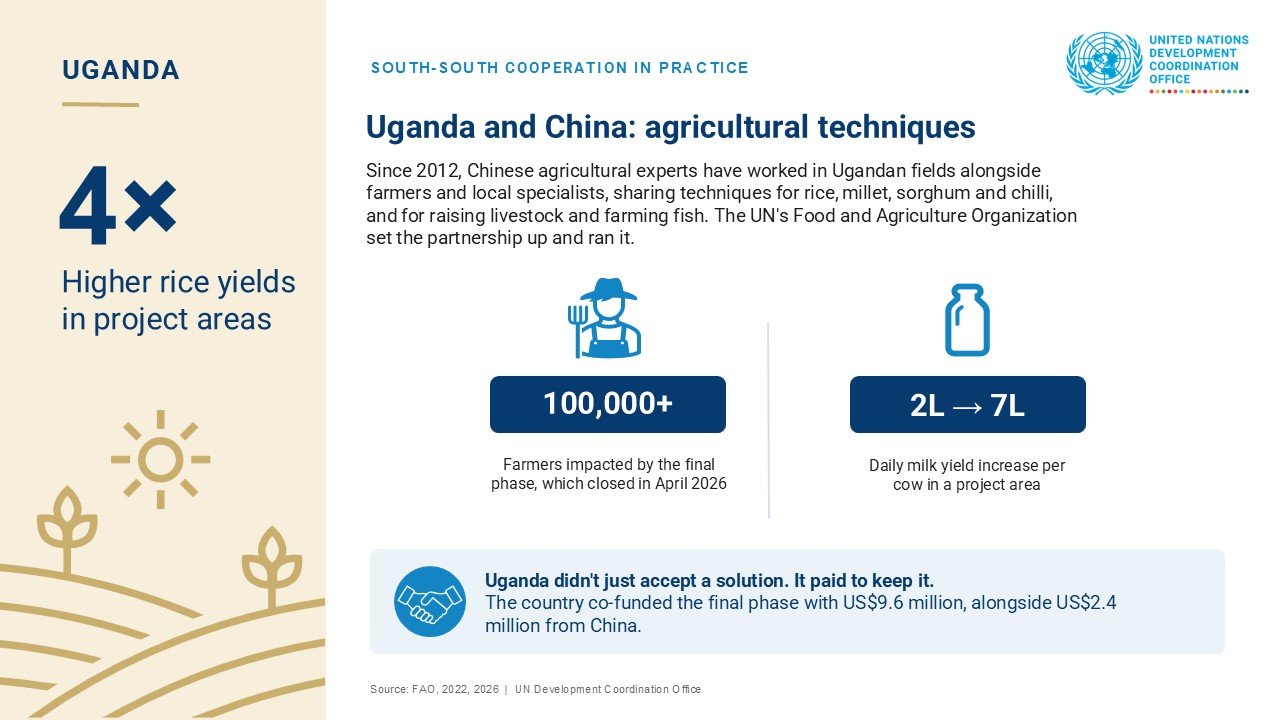
For years, Ugandan farmers grew far less food per field than they could have. Since 2012, at least 56 Chinese agricultural experts have travelled to Uganda to help change that, by working in the fields alongside Ugandan farmers and local specialists.
They shared practical techniques for growing rice, millet, sorghum and chilli, and for raising livestock and farming fish. The results were large. In one area, rice production per hectare quadrupled. In others, cows went from producing 2 litres of milk a day to 7.
The UN's Food and Agriculture Organization (FAO) set the partnership up and ran it, matching Uganda's request with Chinese expertise, providing technical backing and supervising the work as it went.
The final phase closed in April 2026, having reached more than 100,000 farmers.
But the most striking part isn't a farming number. For that last phase, Uganda co-funded the venture and contributed $1.6 million alongside $3 million from China. Uganda didn't just accept a solution. It paid to keep it.
Honduras and India: Water-Testing Methods
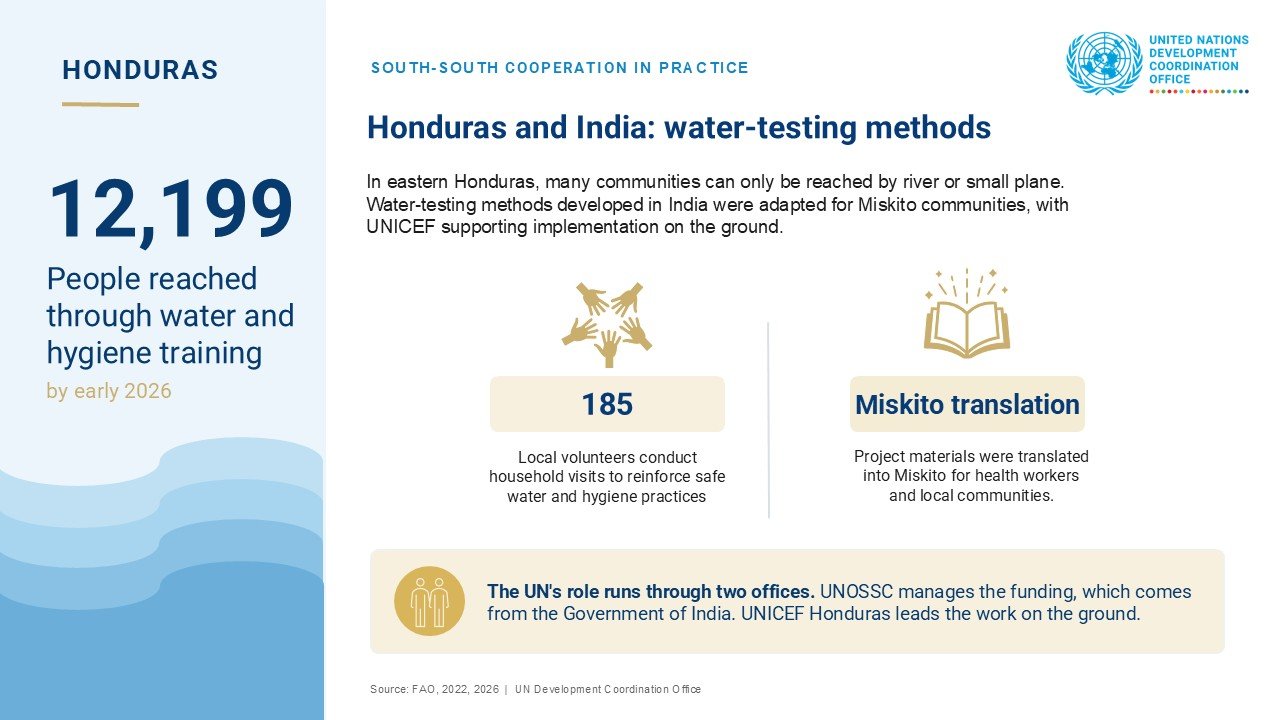
Gracias a Dios, in eastern Honduras, is one of the hardest places in Central America to reach. There are no roads in. You arrive by small plane or by river. For the Miskito communities who live there, clean water and safe sanitation have always been difficult to come by. Many residents had no toilet and were practising open defecation, and nearly half had no access to safe drinking water.
India has spent years solving the same problem in its own villages: cheap ways to treat water, testing that doesn't need a laboratory, and villagers trained to monitor quality themselves. Those methods are what arrived in La Mosquitia, carried there by the UN Children's Fund (UNICEF) and reworked for Miskito communities.
Health workers were trained in water treatment and testing, hygiene materials were translated into the Miskito language and 185 local volunteers now visit households to help families keep the new practices going.
The UN's role runs through two offices. The UN Office for South-South Cooperation (UNOSSC) manages the funding, which comes from the Government of India. UNICEF Honduras leads the work on the ground, alongside the Ministry of Health, the Ministry of Education, the municipality and local Indigenous councils.
By early 2026, 12,199 people had been reached with hygiene and water training.
How are Countries Building South-South Cooperation Into Their Systems?
In a growing number of countries, South-South cooperation is becoming less ad hoc and more institutionalised, with UN Country Teams helping turn exchanges of knowledge and expertise into a sustained part of national cooperation frameworks.
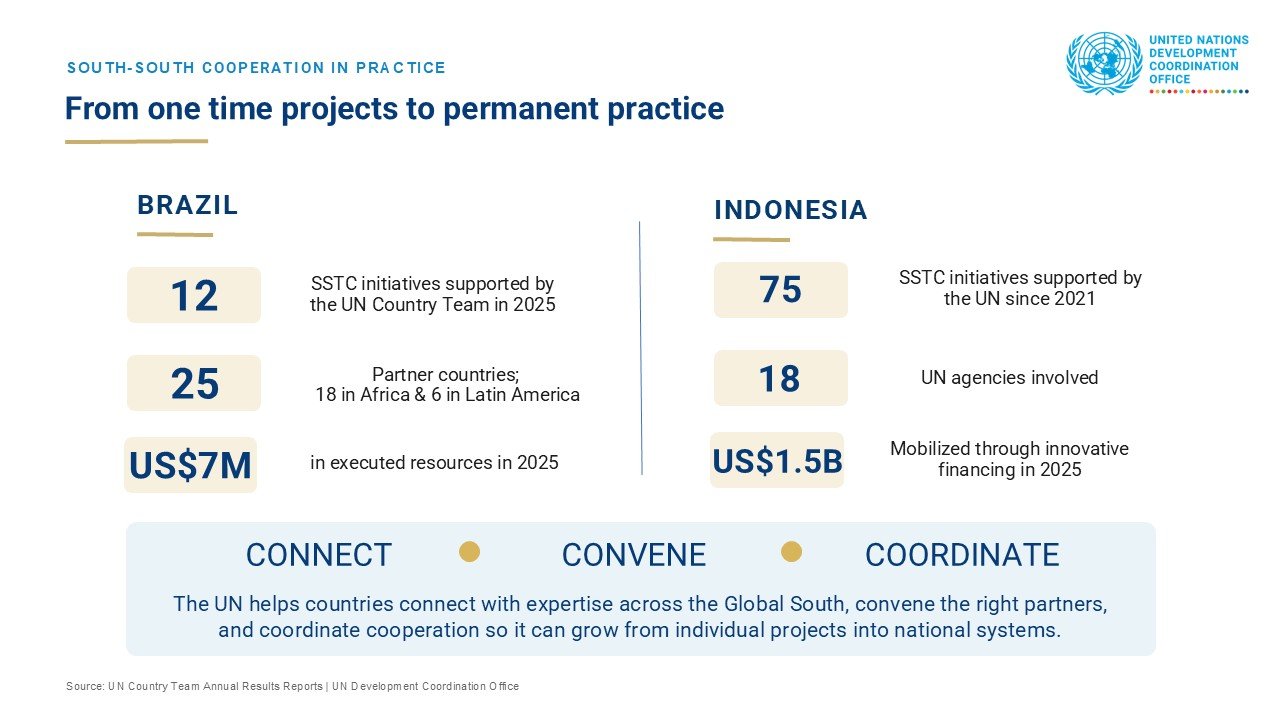
Brazil: Brazil offers a good example of what this looks like in practice. In 2025, the UN Country Team supported 12 South-South and triangular cooperation initiatives involving 25 countries and $7 million in executed resources. Eighteen African countries and six Latin American countries took part, while Colombia and Peru accounted for the largest number of initiatives. Five additional initiatives operated at regional level in Latin America and the Southern Cone.
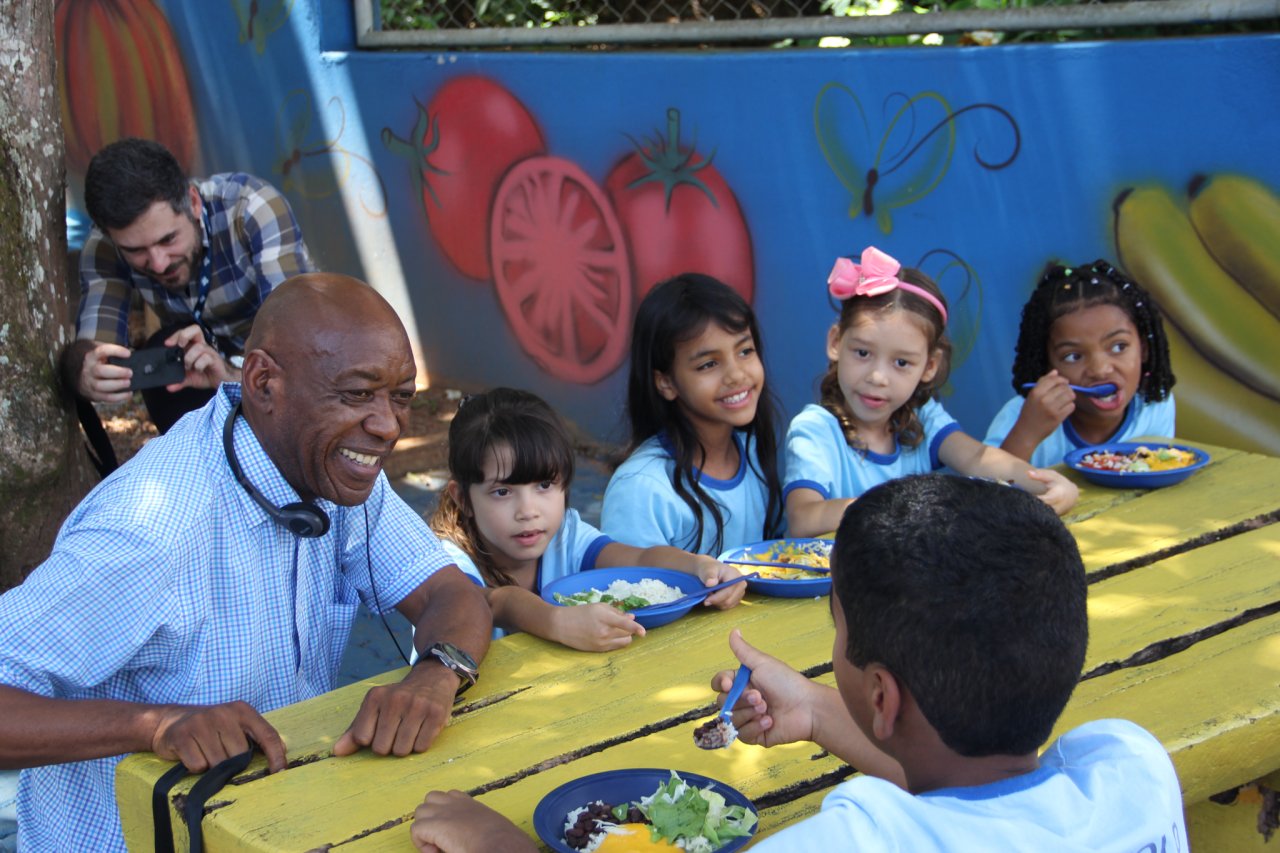
Last year, the World Food Programme (WFP) Centre of Excellence against Hunger in Brazil strengthened its role as a global reference on school feeding, food security and South-South cooperation. The Centre supported the 2nd Global Summit of the School Meals Coalition, held in northeast Brazil, bringing together Government authorities from around 80 countries. It also expanded technical cooperation with countries across Africa, Asia and Latin America through missions, study visits and capacity building on nutrition and family farming. In addition, social technologies to strengthen school feeding programmes were implemented in Benin, São Tomé and Príncipe, and the Republic of the Congo.
Indonesia: Indonesia is taking a more explicitly institutional approach to South-South and triangular cooperation. In 2025, the UN Country Team developed a South-South and Triangular Cooperation (SSTC) strategy to support the Government’s forthcoming Grand Design on International Development Cooperation and to formalise partnerships, particularly with Indonesia AID. Since 2021, the UN has supported 75 South-South and triangular cooperation initiatives involving 18 UN agencies, using Indonesia’s development experience and the UN’s global networks to respond to growing demand for Indonesian expertise and position the country as a stronger regional and global partner on the Sustainable Development Goals.
How Does the UN Help Make South-South Cooperation Happen?
Behind many of these exchanges is a coordination effort that is easy to miss. Through UN Country Teams and Resident Coordinators, the UN helps countries identify relevant expertise, connect with the right partners and adapt proven solutions to their own contexts, making it easier for successful ideas to travel.