Communities in Kosovo Build a Path from Struggle to Stability
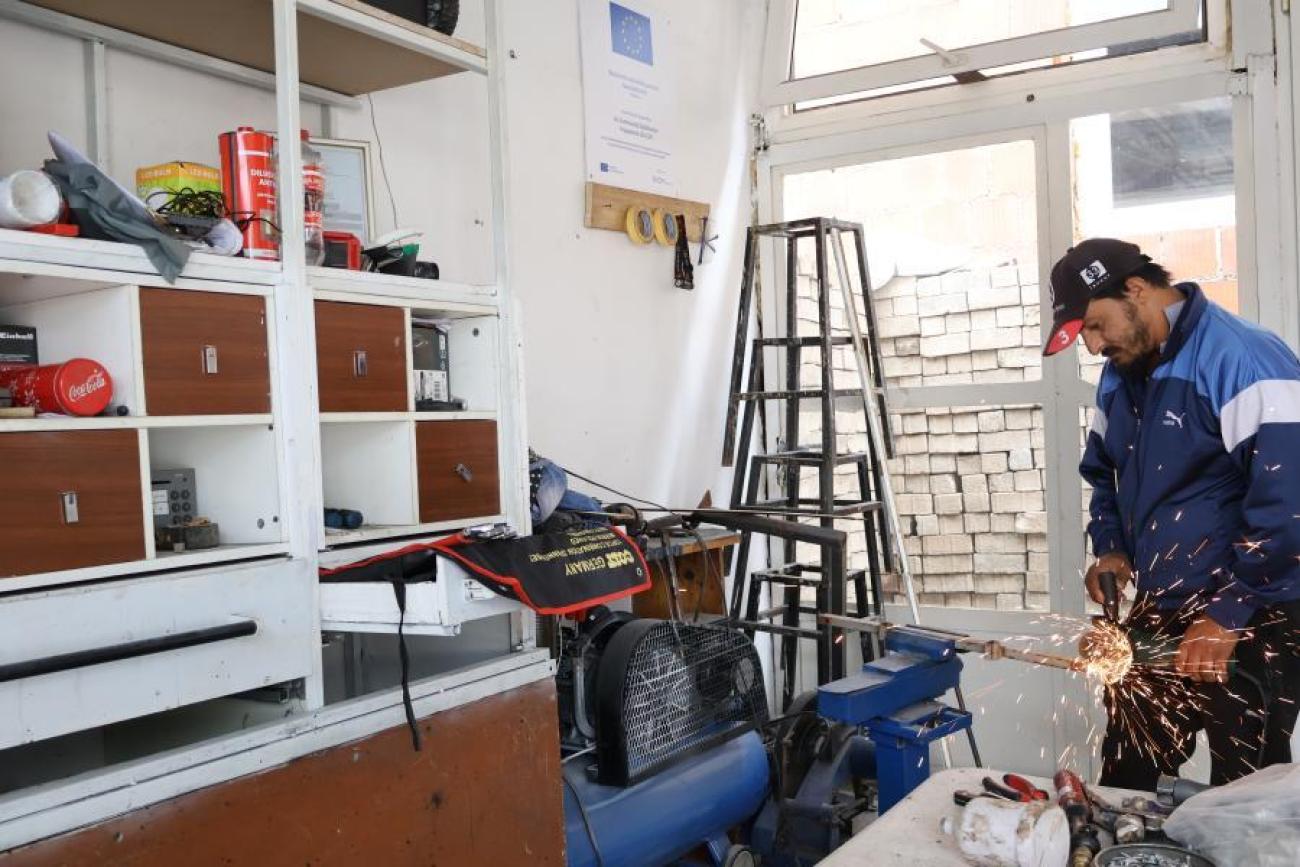
In a small garage in Podujevë/Podujevo, the sharp crackle of a welding machine cuts through the quiet afternoon.
Sparks scatter across the concrete floor as Faton Behluli, a 35-year-old craftsman from the Ashkali community, shapes metal into something new — strong, useful and full of purpose.
“I used to do manual work for others,” he says, setting down his tools for a moment. “It was exhausting, both physically and mentally. Today, I have my own workspace, my own equipment and peace of mind knowing that my work sustains my family.”
For years, Faton worked wherever he could find a job — in construction sites, repairing doors or helping neighbors with small metalwork tasks. Despite his skill, the lack of proper tools kept him from moving forward. “A craftsman without tools is like having hands you can’t use,” he says.
Everything changed when he was selected as a beneficiary of the Community Stabilisation Programme (CSP), implemented by the International Organization for Migration (IOM) and funded by the European Union, in cooperation with the Ministry of Communities and Return.
Faton's experience aligns with the CSP's broader goal of creating income-generating opportunities in Kosovo's* key industries, enhancing (re)integration prospects for communities.
Now in its fourth phase, the programme's previous iterations, carried out from 2010-2019, supported about 900 micro-enterprises and contributed to individual and community development projects, creating hundreds of jobs and providing business skills training to over 500 people. Through mobile outreach and local engagement, the CSP aims to improve the employment opportunities of targeted communities by supporting ongoing or start-up ventures, and by providing technical assistance and productive business assets to aspiring entrepreneurs.
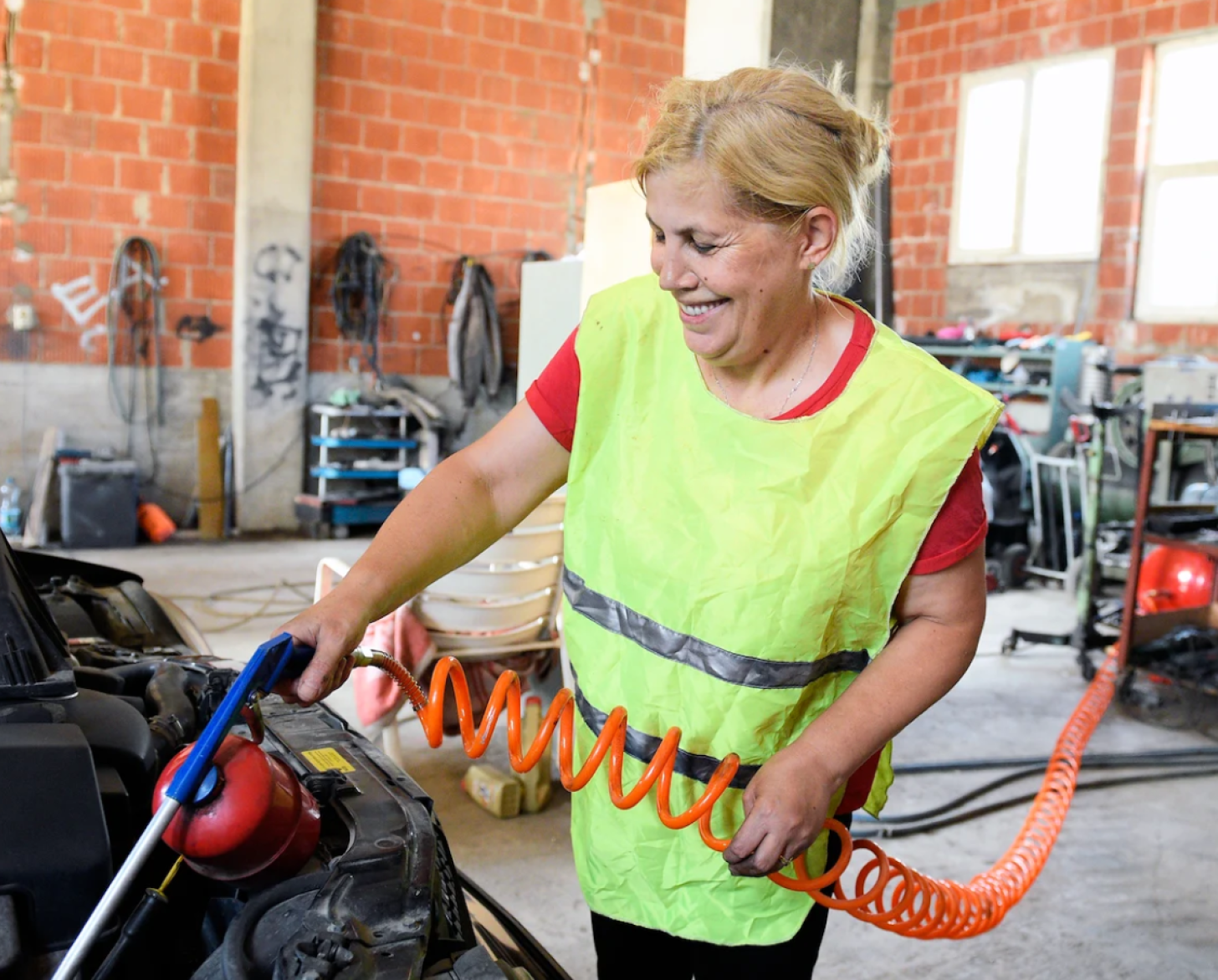
The programme envisions a future where all of Kosovo's residents will enjoy a more inclusive, formalised and stable economy, as well as access to new products, services and community development.
Through the programme, Faton received the essential equipment he had long needed: a welding machine and metal processing tools and equipment. With this support, he was finally able to open his own small garage, transforming his skills into a stable livelihood.
“These tools changed everything,” he says with a proud smile. “Before, I depended on others. Now, I have my own workshop. I can plan my day, manage my work and provide for my family without worrying about tomorrow.”
Each day, Faton puts his equipment to use — welding, fixing and creating. He has even started working occasionally with his cousins, offering them small paid jobs. “We’re continuing the trade passed down from our fathers and grandfathers,” he says. “When we work together, we’re not just earning; we’re keeping a tradition alive.”
Looking ahead, Faton hopes to expand his business and acquire more professional machines so he can employ others on a regular basis. “Many young people want to work but don’t have the means,” he explains. “With the right tools, everything is possible.”
For Faton, the support meant more than just new equipment. It gave him a renewed sense of dignity and control over his life. “Without this support, it would have been much harder,” he admits. “Now I can provide for my family, stay organized and live without fear of what tomorrow brings.”
Through the EU-funded Community Stabilisation Programme (CSP), IOM has supported individuals like Faton to turn their skills into sustainable livelihoods, empowering families and strengthening communities across Kosovo.
This article is based on a story originally on the UN Kosovo Team's website. Learn more about the UN's work in Kosovo.
*All references to Kosovo shall be understood to be in the context of Security Council Resolution 1244 (1999)




Latest news and updates


