The Three Doors of Geneva: Will AI Change the World for Everyone, or Only for Some?
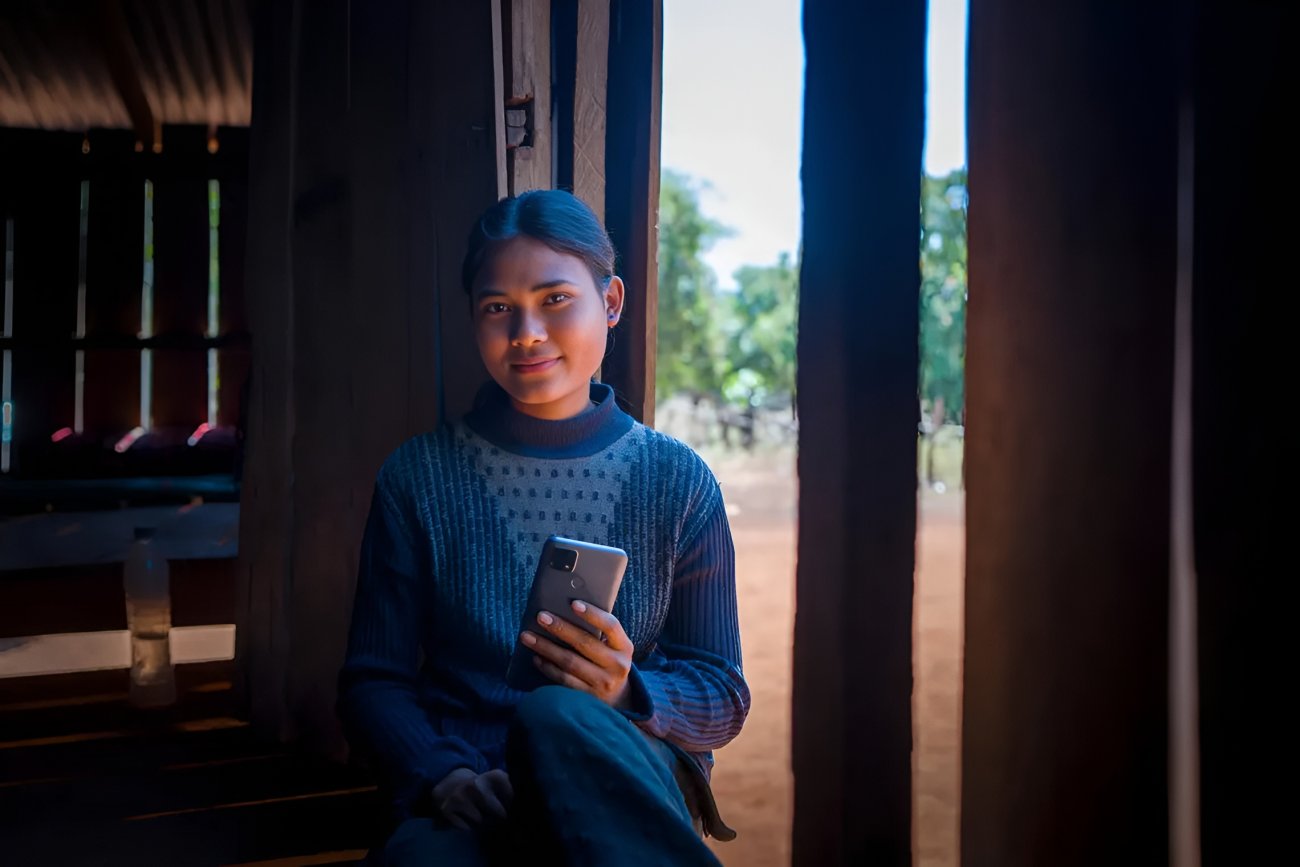
Reporting from Geneva Digital Week, Danilo Mora, Communications Officer from the Resident Coordinator system in Costa Rica, reflects on whether AI will become a great equaliser or deepen global divides.
Geneva Digital Week brings together governments, companies, international organizations and young innovators to discuss how to regulate and harness artificial intelligence. The event puts a central dilemma on the table: using this technology to expand access to health, education and connectivity, or allowing it to concentrate power even further and widen existing gaps.
It was Tuesday morning, and Geneva’s Palexpo smelled of coffee, bread and cables. In one corridor, Mexican and Ukrainian children worked diligently to create robots that move with surprising agility. In another, a screen showed in real time how an algorithm reads medical images, detecting early signs of cancer that would be imperceptible to the human eye. Farther on, an African girl looked in amazement at an interactive map that lights up, one by one, schools in a Latin American country that will be connected to the internet for the first time.
All through this Digital Week, the old question of whether artificial intelligence “will change” the world, seemed outdated. The real question, the one the UN Secretary-General left hanging in the air on Monday, is another, much harder one: will it change the world for everyone, or only for some?
One Week, Three Doors
What has happened this week in Geneva had one umbrella name: Geneva Digital Week, and three different entry points that, together, tell a single story.
The first door was the Global Dialogue on AI Governance, on July 6 and 7: the first AI governance forum established by the UN General Assembly, with all countries seated at the table to finally have the conversation the world needs. This was the political level, the place where people discuss who sets the rules and how.
The second was the World Summit on the Information Society Forum (WSIS Forum 2026), from July 6 to 10: the most established multilateral platform for digital cooperation, born in 2003, which this year is meeting for the first time after its twenty-year review. This is the implementation level, where commitments become projects, roadmaps and actions. Its benchmarks are concrete and have made significant progress: in two decades, global internet use rose from 15 per cent to 74 per cent of the population.
The third, which opened on Tuesday, was the AI for Good Global Summit, from July 7 to 10: the showcase where technology is focused on solutions for people. Keynote talks and practical demonstrations show the benefits that can be unlocked with responsible AI.
A single stage opening three doors. And that decision contains the thesis of the entire week: governance, cooperation and innovation are not separate worlds, but three faces of the same effort.
The Idea that Organizes Everything
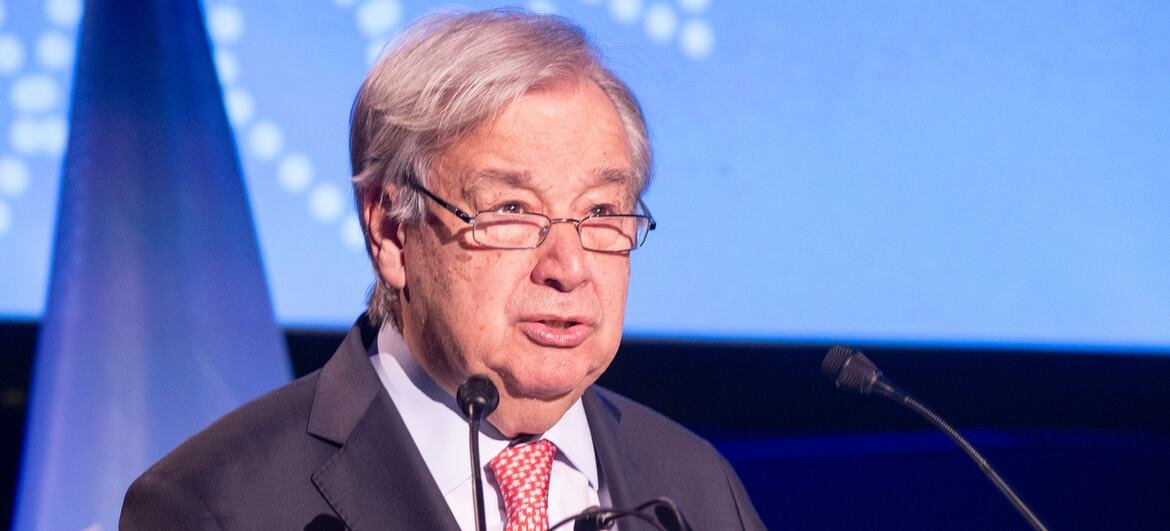
On Monday, at the opening of the Global Dialogue, UN Secretary-General António Guterres delivered a speech that has set the tone for these days. More than pointing to a threat or reciting an ode to progress, it was above all a defense of an idea that will surely shape this generation and the ones to come.
Throughout all of human history, the Secretary-General recalled, expert knowledge was in the hands of very few people, in very few places and at far too high a price. Penicillin took decades to reach the villages that needed it most. Electricity took more than a century, and it is still arriving. Every major advance in human progress first opened a gap between those who could pay for it and those who had to wait their turn.
Artificial intelligence, Secretary-General Guterres said, could break that pattern for the first time. Used well and shared widely, it has the power to “compress decades of development into years” and become “the great equaliser of the twenty-first century.”
But, and this was the sharp edge of his message, none of that will happen by default. The same technology that can equalise the world can also concentrate it as never before: today, computing capacity, talent and data are in the hands of a handful of companies and countries. The choice, he summarised, is not between optimism and fear, but between “governing by design or drifting by default.”
That phrase, the great equaliser, if we govern it by design, is the one worth carrying with you as you walk through Palexpo. Because at every stand, in every demonstration, in every session, what is truly being tested is not whether AI works. It is whether it makes sense for the 2.2 billion people who are still disconnected from the digital world today, one in four people on the planet.
Four Ways to Equalise the World
If you walk through these global summits looking for that idea, you find it made real in dozens of projects. Four of them, among all the others, summarise it especially well.
- Time. In the health wing, a team shows how AI detects early signs of cancer in medical images. A trained algorithm analyses them in seconds and prioritises them according to risk level. The promise is not to replace the oncologist, but to reach places where there is no oncologist. Secretary-General Guterres had illustrated it on Monday with a precise image: a mother in a rural clinic whose ultrasound is read within minutes, and whose cancer is detected in time, not when it is already too late. In a world where the place where one is born determines who survives a tumor, compressing diagnosis time is, literally, equalising life expectancy.
- Integrity. At a UN Office of Drugs and Crime (UNODC) showcase, officials from several ministries follow closely a demonstration on the use of AI to track money laundering and corruption: systems that cross-check millions of transactions, detect patterns impossible for the human eye to see and trigger alerts about suspicious financial flows. For many developing countries, corruption is the invisible tax that drains development resources. Placing a tool with this level of power in the hands of auditors and financial intelligence units means leveling the field against those who, for decades, counted on opacity as an ally.
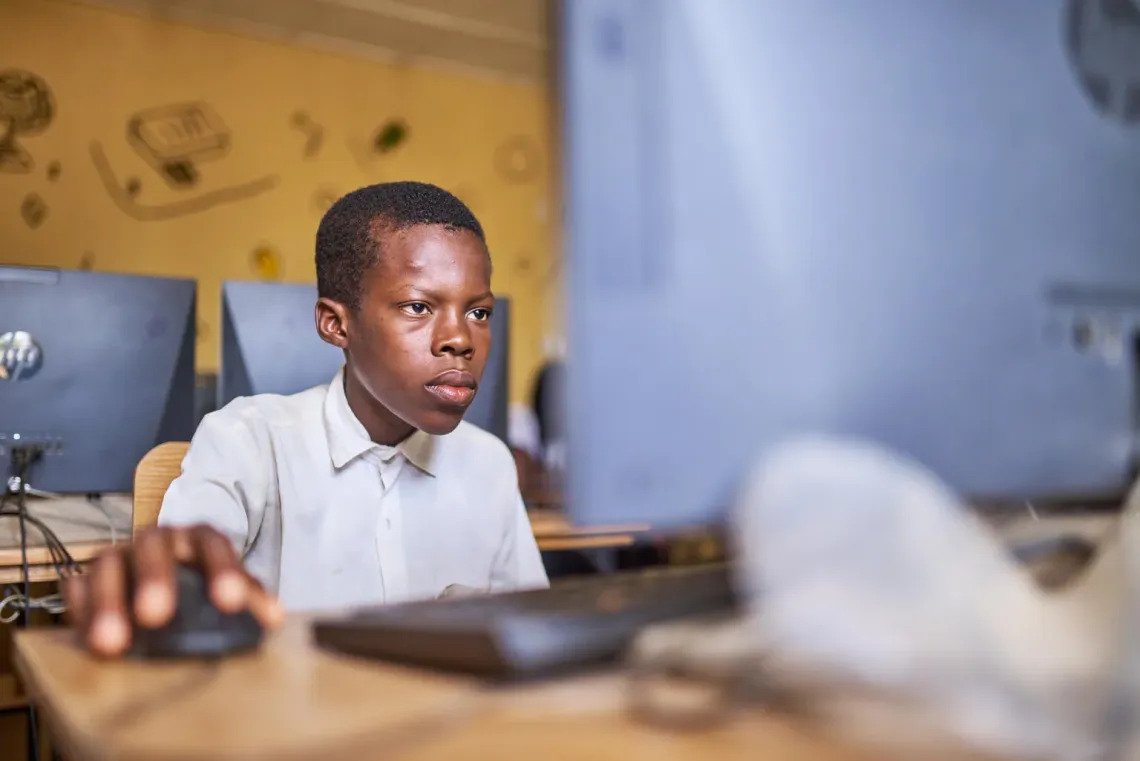
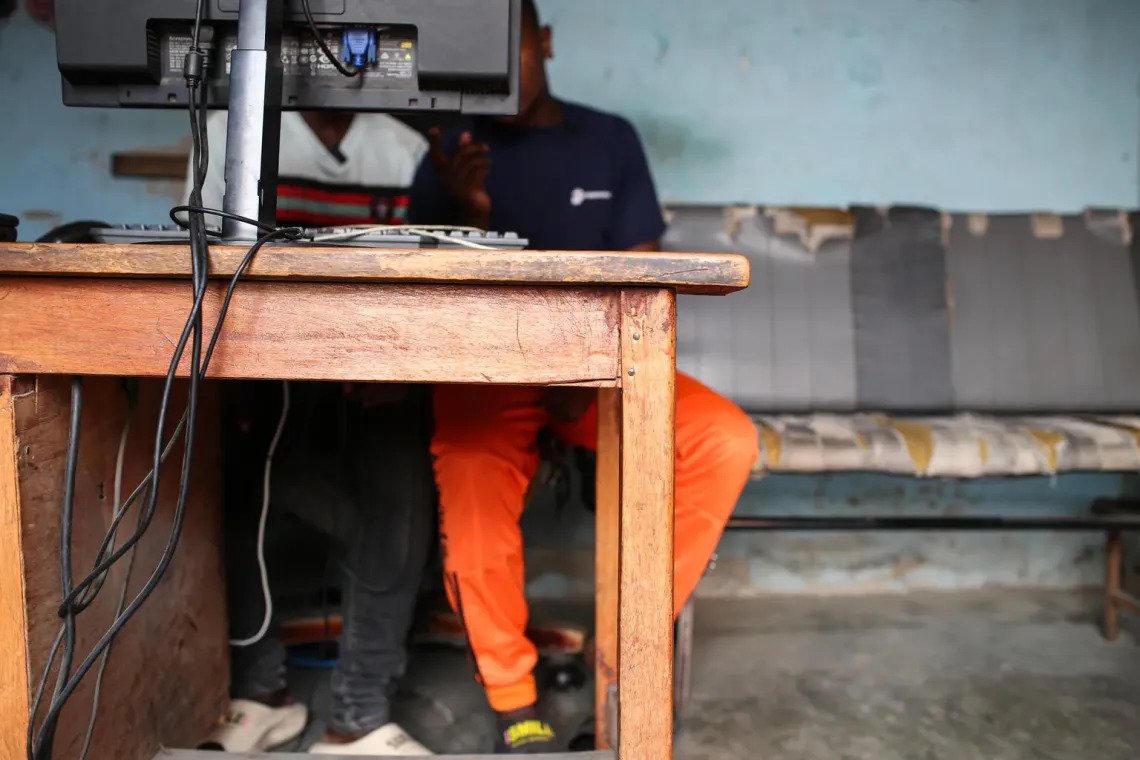
- Access. Another project addresses the most basic of inequalities: connection itself. Initiatives to bring internet access to educational centres in remote areas, using AI to map which schools remain unconnected and plan how to reach them, attack the root of the problem running through the entire week. As Secretary-General of the International Telecommunication Union (ITU) Doreen Bogdan-Martin, and the first woman to lead the organization, recalled, for AI to benefit everyone, technology and international cooperation must move forward together, “especially for those who have not yet joined the digital world.”
- Judgment. And perhaps this is the quietest, but not the least important. Several sessions discuss how to educate for critical thinking in the age of AI: how to train students and citizens, to live with machines that write, answer and persuade, without delegating to them their capacity to discern. If AI is going to be the great equaliser, education is the condition that prevents that power from becoming dependence.
Four projects, four verbs: give time, give integrity, give access, give judgment. Four different forms of the same wager.
The Coalition of Those Who do Not Want to be Left Behind
The idea of the great equaliser does not stand on its own: it needs people to push it forward. And this week, in Geneva, that coalition is beginning to take shape.
On July 2, in the run-up to the summit, the AI for Good Global Commission was launched, a commission bringing together more than forty founding members, including heads of state and government, directors of UN agencies and top corporate executives, to chart practical paths that strengthen trust, expand access and unlock AI’s potential at the speed the technology demands. It is co-chaired by the President of Rwanda, Paul Kagame, and Salesforce founder Marc Benioff; Doreen Bogdan-Martin, Director of the ITU, serves as vice-chair.
“Technology must be a force for good, and we have a responsibility to use it accordingly,” Kagame said when announcing it. “Let us work together to reduce inequality and enable more and more of our citizens to benefit from the good that AI can offer us all.” Bogdan-Martin framed it as a reality: no single organization can, on its own, put AI at the service of all humanity; collective leadership and the combined expertise of partners from all sectors will be needed.
The Bill that Also Needs to be Equalised
Not everything being discussed in Geneva shines. The same technology that promises to compress decades of development carries a material cost that no one wants to pay, and that Secretary-General Guterres refused to hide.
The data centres that power AI already consume more electricity than most countries. By 2030, they could use more energy than every nation in the world except five, and enough water to cover the needs of the 1.3 billion inhabitants of sub-Saharan Africa for an entire year. The Secretary-General called on large companies to measure and publicly disclose the full footprint of their systems: carbon, water, land and to power their data centres with renewable energy by 2030.
This is the other side of the promise to tackle inequality: there is little value in reducing one inequality if, along the way, another is deepened. Equalising access to AI without equalising the distribution of its environmental costs would merely mean exchanging one gap for another.
The Door Remains Open
On Monday, as he closed his speech, Secretary-General Guterres left an image that these days in Geneva seem determined to honour: we may be the last generation capable of setting the terms under which humanity and machines co-exist. The door, he said, remains open. But it will not remain open for long.
At Palexpo this week, dozens of nations, companies, NGOs, universities and the entrepreneurs accompanying them are trying to cross it together before it closes.
This article was originally published by UN News in Spanish.