Our Power, Our Planet: Young Leaders Advancing Human-Nature Relationships
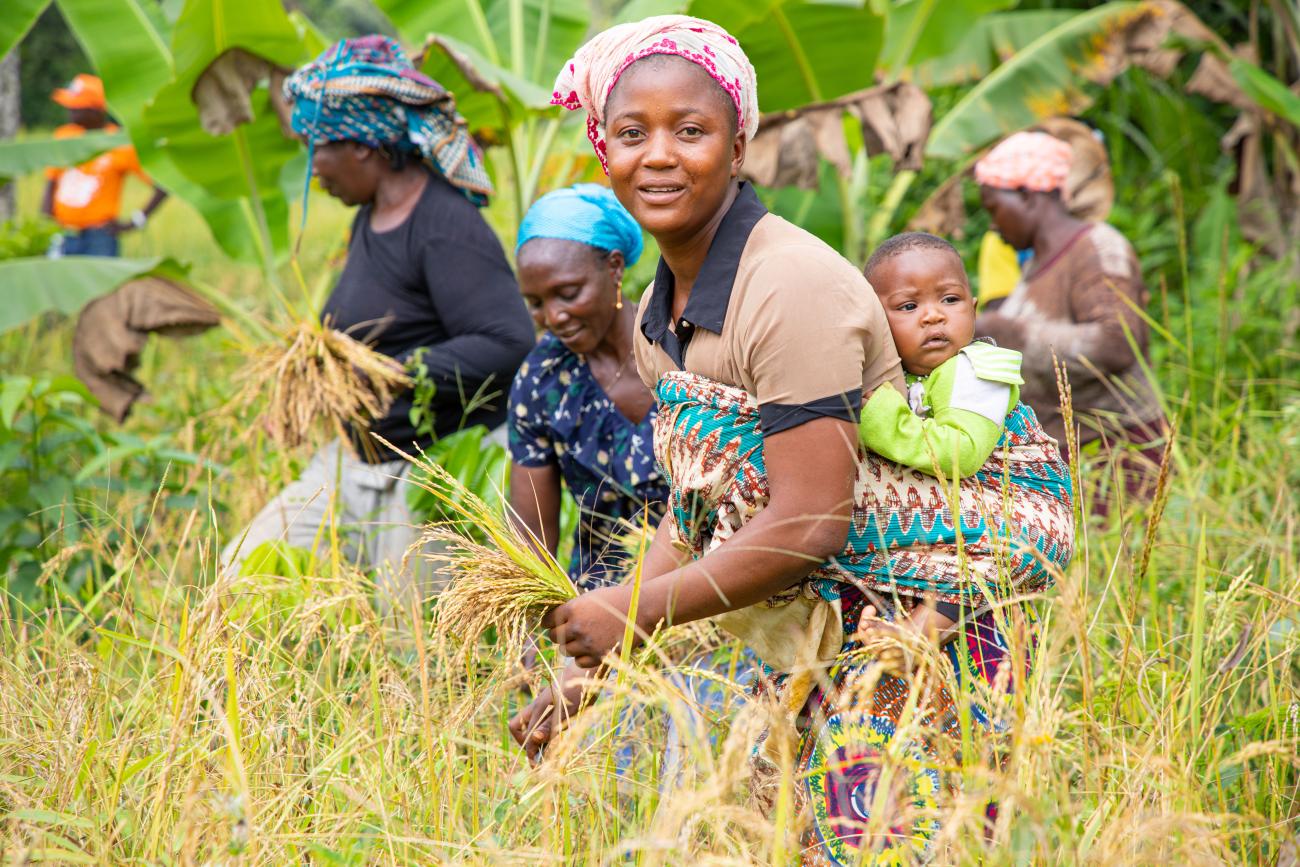
This story was published in commemoration of the upcoming International Day for Biological Diversity, celebrated every year on 22 May. This year's theme, "Acting Locally for Global Impact," is a reminder that meaningful change often starts in communities. As the leaders of both today and tomorrow, young people are championing biological diversity through community programmes that are inclusive, sustainable and truly for people and planet.
The choices made today will shape whether the coming decades are defined solely by planetary pressures or by renewed pathways of reconnection in which people and the planet can thrive together. The UN Development Programme's (UNDP) flagship Human Development Report (HDR) 2026 explores how people’s aspirations and agency, alongside reciprocal human-nature relationships, shape development outcomes, and how they can be better reflected in development thinking and practice. The report draws on extensive research and analytical work, incorporating diverse perspectives from across regions and sectors, including those of young people.
A recent youth consultation for the HDR 2026 emphasised that reconnecting people—especially young people—with nature is central to advancing more equitable and regenerative development pathways. It highlighted the importance of integrating youth voices, Indigenous and traditional knowledge, and intergenerational perspectives into development frameworks and metrics. It also underscored persistent gaps between policy and implementation and barriers to youth participation. These insights highlight that inclusion is not only about participation, but about reshaping how development is defined and measured in relation to nature.
This article highlights five young leaders from across the globe whose work reflects these ideas in practice and the spirit of the report. Across diverse sectors, their initiatives illustrate how connections among people and between people and the natural world are being reimagined through locally grounded, aspirational approaches to environmental challenges. This feature was developed with support from UNDP’s Planet Hub, the Generation17 Team, the Youth4Climate Team and the Youth Team.

Adrián Valiente Benítez – Paraguay
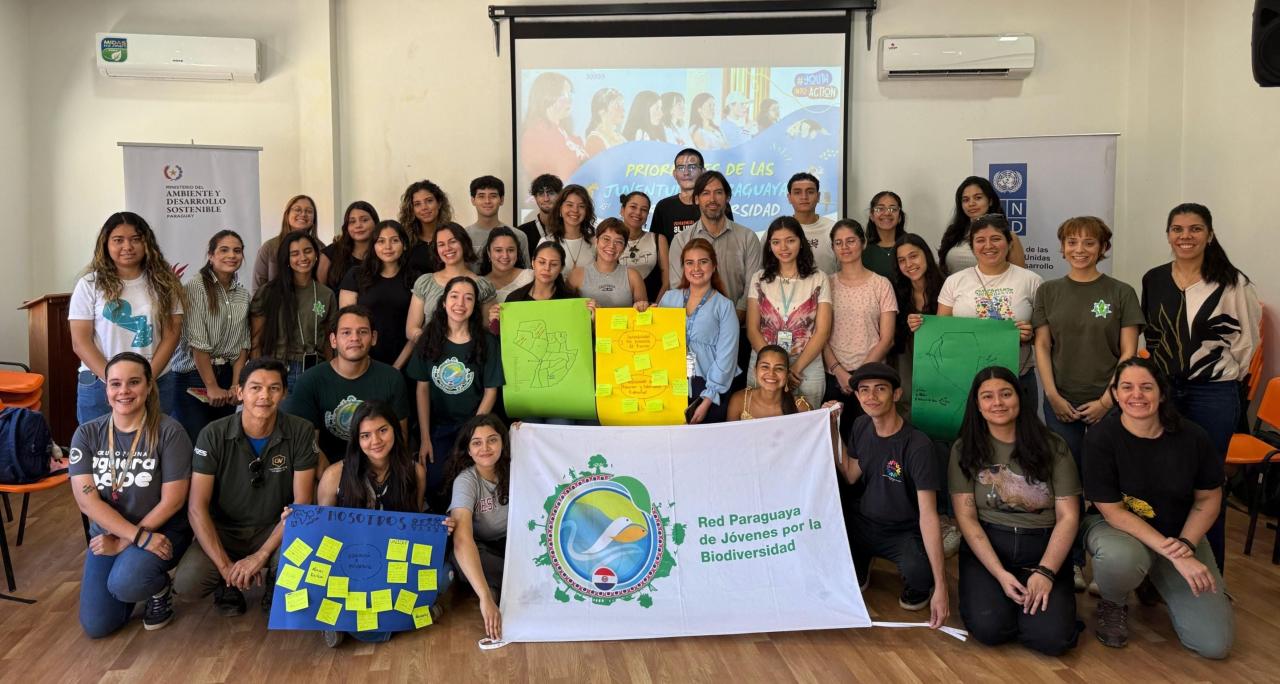
Youth participation in biodiversity governance has been limited. That is what Adrián and the Global Youth Biodiversity Network (GYBN) Paraguay are seeking to address, ensuring that young people are engaged as contributors to environmental policy rather than peripheral stakeholders.
Through a series of nationwide workshops, his team helped mobilise over 400 youth from Indigenous, rural, urban and vulnerable communities. With technical support from UNDP Paraguay, these contributions informed Paraguay’s National Biodiversity Strategy and Action Plan (NBSAP).
This process enabled more structured youth engagement in national biodiversity planning and supported the formation of a dedicated youth chapter within biodiversity policy discussions, as well as Paraguay’s first youth delegation to COP16.
By linking consultation processes with policy engagement, the initiative demonstrates how participation can shift from input to influence when embedded in institutional processes, helping bridge gaps between inclusion and decision-making.
Duncan Wohwiehembe – Papua New Guinea
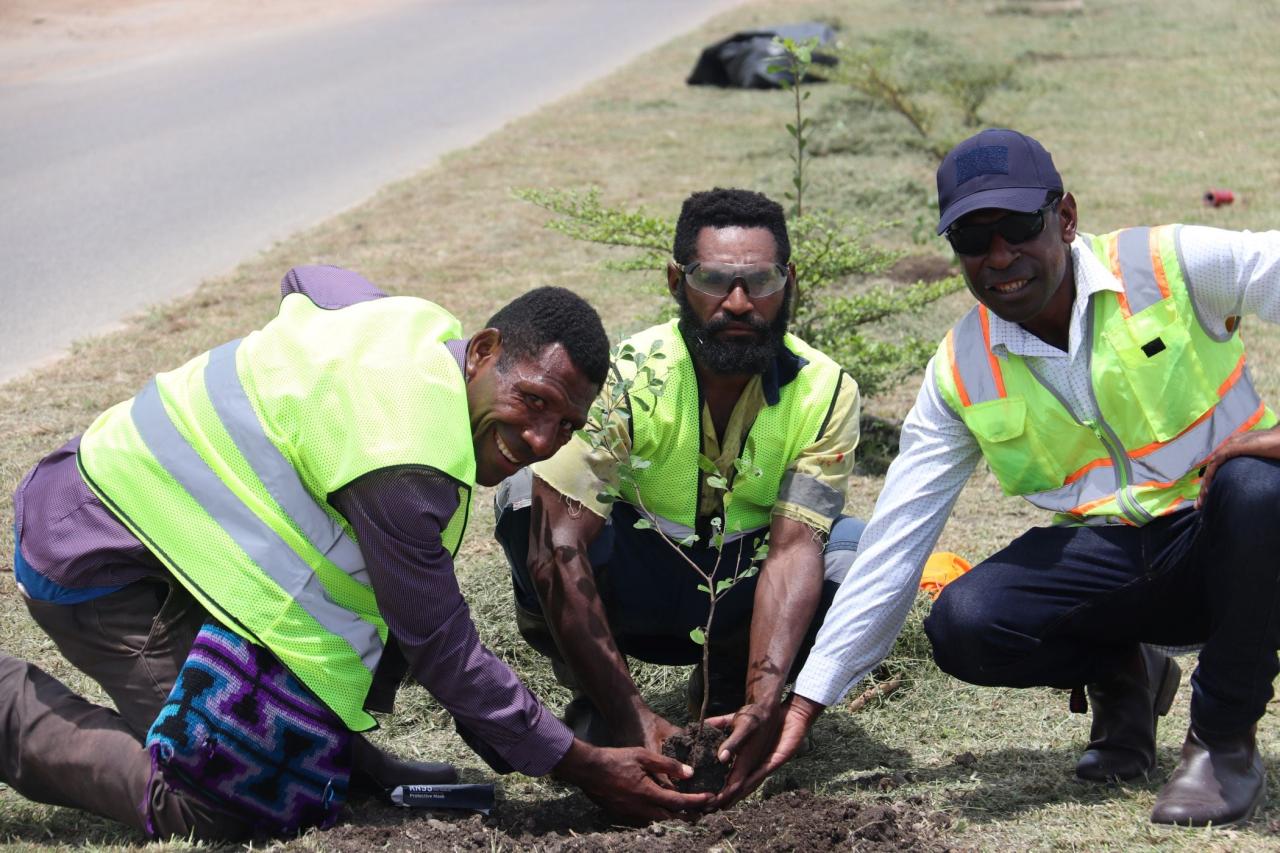
As Director of Community Services at the National Capital District Commission (NCDC), Duncan leads initiatives on waste management, urban greening and public spaces while integrating youth into climate action. His work addresses the challenge of translating climate commitments into integrated, on-the-ground solutions that address both environmental and socioeconomic priorities.
Under his leadership, over 5,000 trees have been planted through the Green City Network, alongside mangrove restoration and innovative urban forestry systems based on Geographic Information Systems. These efforts have also generated approximately 12,000 green jobs annually for young people.
His other initiatives, such as the “War Against Plastic” and circular economy pilots like waste-to-compost systems, demonstrate how cities can transform environmental challenges into opportunities for livelihoods. Duncan also ensured youth voices were reflected in Papua New Guinea’s Youth Statement for Nationally Determined Contributions 3.0, embedding grassroots perspectives into national climate commitments.
Rahaf Abu Mayyaleh – Jordan
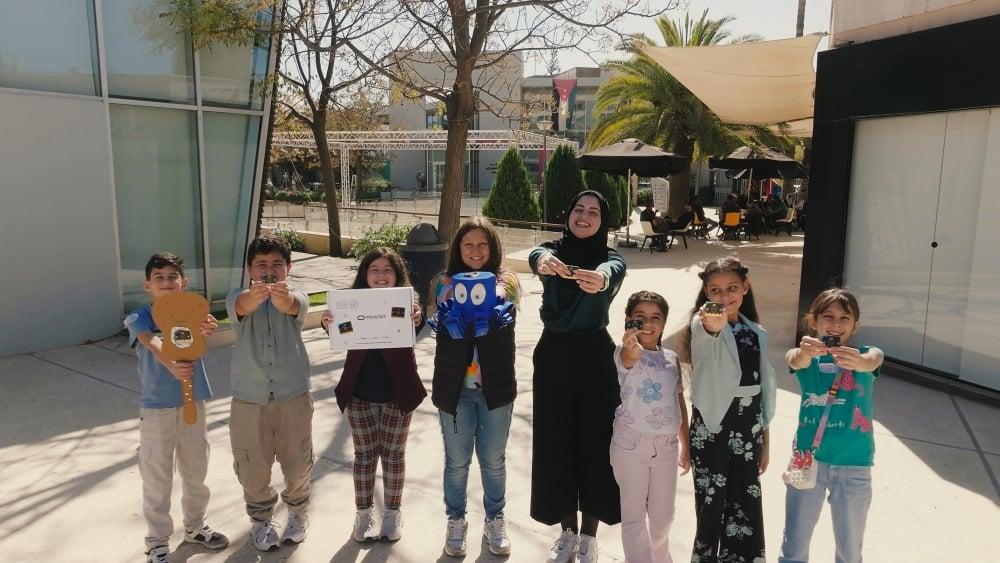
Expanding digital technologies are reshaping education and opportunity across Jordan, but access to those tools remains uneven, particularly for children and youth, and underserved communities. As a UNDP Generation17 Young Leader and founder of IBTKRGO, Rahaf equips them with skills in programming, robotics and artificial intelligence while integrating environmental responsibility into learning tools.
IBTKRGO’s recyclable educational kits address both digital inequality and electronic waste, illustrating how education systems can align with circular economy principles. To date, the initiative has reached over 3,000 young people in Jordan and engaged approximately 5,000 through digital platforms.
The intersection between digital transformation and environmental sustainability is an area also explored in the Human Development Report 2025, which notes that artificial intelligence can expand human capabilities while also risking deeper inequalities if access, governance and skills are not made inclusive.
Rahaf emphasises that scaling impact requires collaboration and inclusive access to resources to enable more young people to lead solutions in their communities.
Joshua Ichor – Nigeria
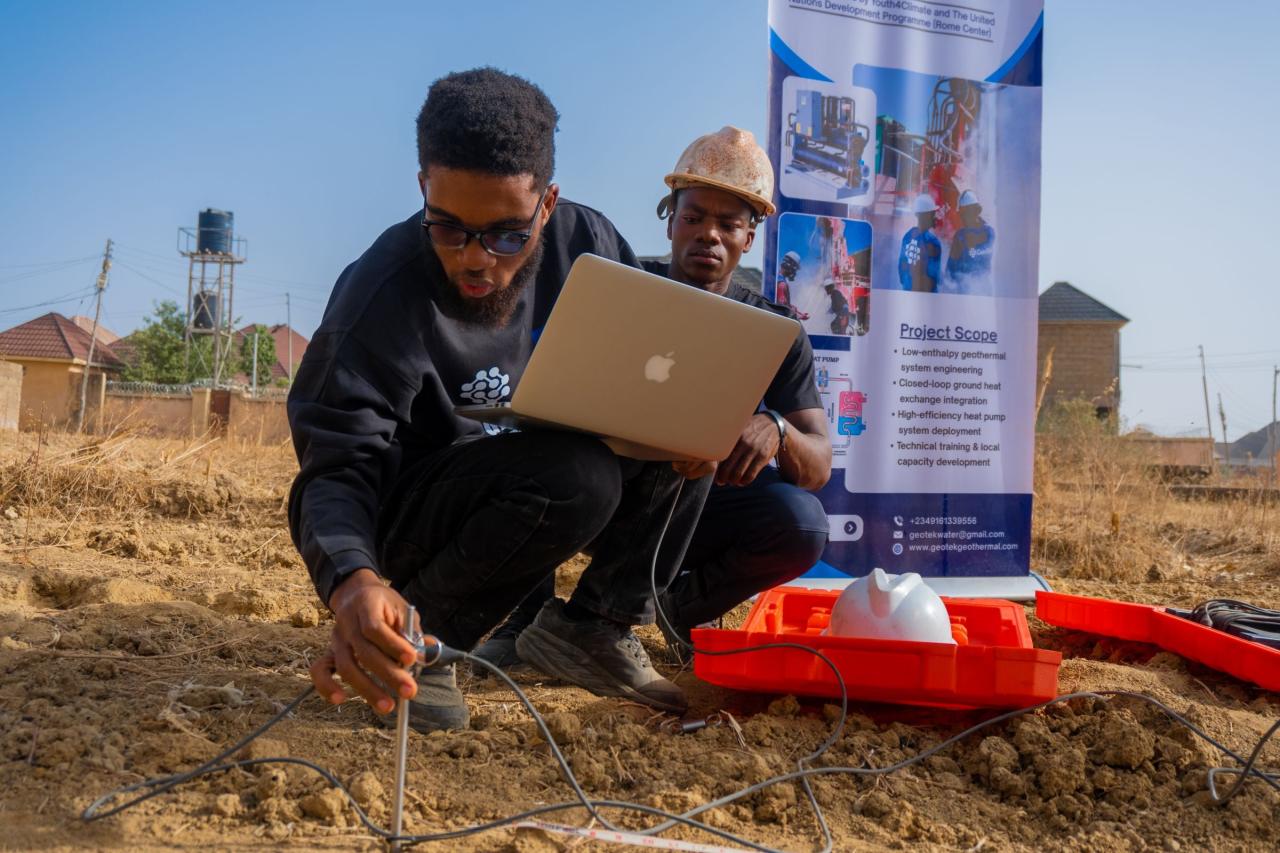
GeoTek Water Solutions, founded by Joshua, bridges groundwater exploration and renewable energy innovation. The company develops lower-temperature geothermal systems that use the Earth’s heat for sustainable cooling and energy.
His work represents one of the early efforts to demonstrate geothermal energy solutions in West Africa, showing how locally rooted solutions can respond to climate challenges and emerging energy demands. In parallel, GeoTek also advances circular approaches to waste and resource use.
In response to rising cooling demand, the company is developing localised heat pump systems and improving subsurface mapping to expand the accessibility and affordability of geothermal energy. These systems have the potential to reduce cooling energy use by up to 60 per cent.
Supported by UNDP's Youth4Climate initiative, the project aims to deploy pilot systems, train over 50 engineers and technicians, engage more than 200 people through community outreach and raise awareness of renewable energy solutions, echoing the Human Development Report’s emphasis on enhancing people’s capabilities and agency as central to advancing sustainable development.
Le Hoa Minh – Viet Nam
Minh works at the intersection of tourism, water systems and cultural heritage in Pu Luong Nature Reserve as a co-founder and Head of Product at Magnolia Sustainable Experiences. Her work responds to increasing pressure from tourism on local water resources and traditional rice farming systems, underscoring that sustainable development pathways are more effective when they incorporate local knowledge systems and reflect community-defined priorities.
Through community-led design, she has helped develop circular homestay models, greywater reuse systems and sustainable tourism codes of conduct, while integrating Indigenous Thai and Muong knowledge systems into conservation practices.
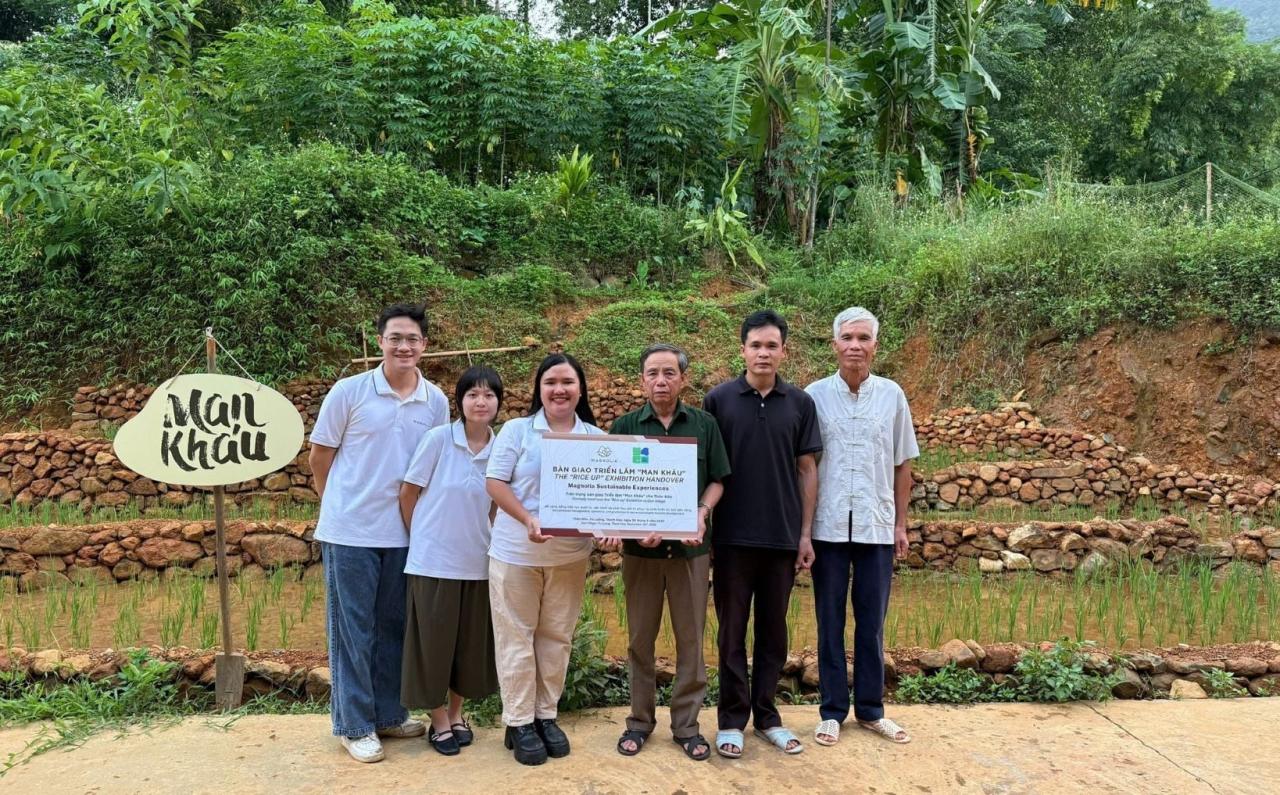
The “Man Kháu (Rice Up)” exhibition engaged over 300 visitors, creating new income opportunities for local artisans while strengthening cultural identity and environmental awareness. Supported by Youth4Climate, the exhibition was part of a project aimed at preserving rice-farming culture in Pu Luong.
Minh’s work demonstrates that environmental sustainability and cultural identity are deeply interconnected and must be co-created with communities. By repositioning communities as knowledge partners, the initiative strengthens local agency in shaping sustainable livelihoods and development pathways.
Youth as Community Builders and Systems Shapers
Taken together, these examples illustrate how environmental and human development challenges are closely interconnected and require integrated, aspirational approaches. Across biodiversity governance, urban transformation, digital education, energy innovation and cultural regeneration, they show how young people are not only participating in solutions but also shaping how those solutions are designed and implemented.
As HDR 2026 continues to explore human-nature relationships, these stories offer practical insights into how inclusive and locally grounded approaches can contribute to more adaptive and sustainable pathways and help bridge persistent gaps between policy ambition and implementation. Importantly, they suggest that advancing human development requires recognising the role of relationships with the natural world, valuing diverse knowledge systems and enabling more inclusive participation in shaping solutions.
The future of development will be shaped by how effectively human aspirations, agency and systems change align with ecological responsibility, ensuring that people and planet thrive together.
This story was originally published by UNDP.