More Than a Drop in the Ocean: What is the High Seas Treaty?
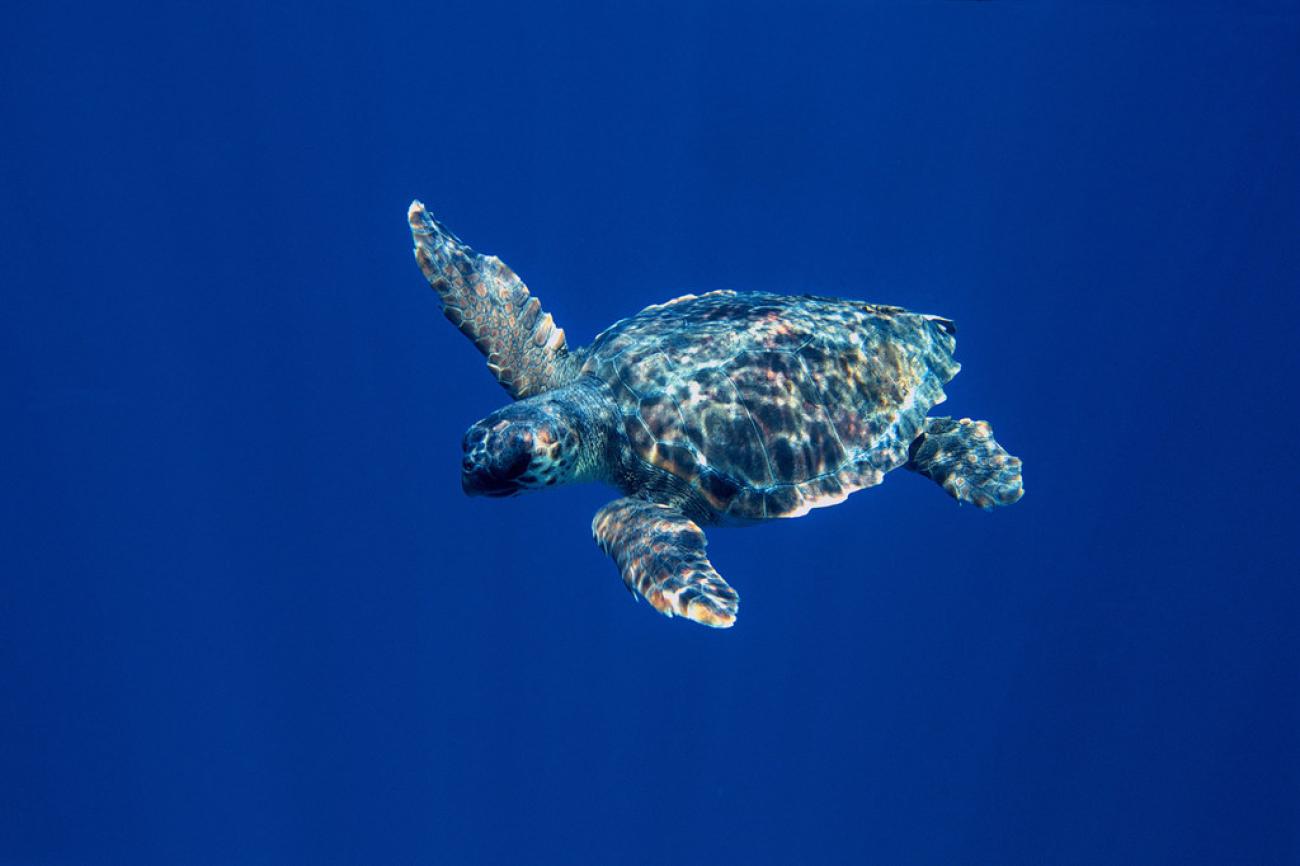
Millions of people across the world have shared the same experience: looking out to the ocean in awe of the vast blue before them. It is no surprise that one of the most biodiverse spaces on Earth, encompassing thousands of life forms, is underwater.
International seabeds and high seas make up over two-thirds of the ocean’s surface and represent over 90 per cent of Earth’s habitat by volume. They are also unique by virtue of how they are governed: no single country’s laws cover the high seas; rather, a complex set of laws and regulations, underpinned – in principle – by international cooperation, aims to ensure that protecting the high seas is everyone’s collective responsibility.
Yet unsustainable economic interests have increasingly surpassed biodiversity preservation in these rich ecosystems. Plastic and chemical pollution, overexploitation, overfishing and illegal practices, exacerbated by ocean warming and acidification, have threatened to upend entire food chains, disrupt species and destroy the livelihoods that depend on them.
The UN is committed to working with partners on turning the tide. Officially in force as of 17 January 2026, the Biodiversity Beyond National Jurisdiction (BBNJ) Agreement, also known as the “High Seas Treaty,” is a legally binding UN treaty that aims to protect and sustainably manage international seabed areas and ocean zones beyond national waters.
What is the BBNJ?
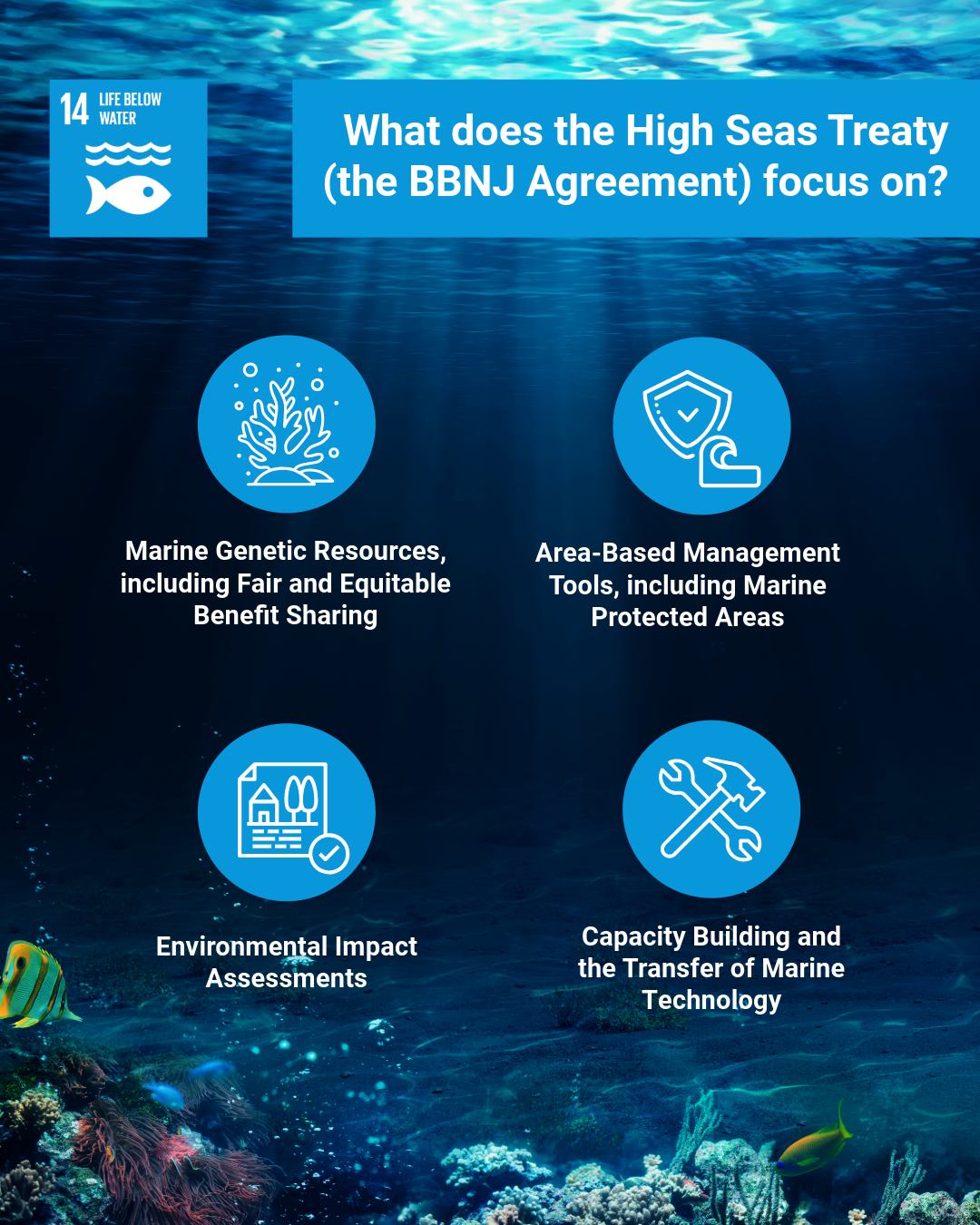
The BBNJ is designed to ensure that high seas and international seabeds are managed sustainably for the benefit of all humanity. Sustainable management involves, for example, environmental impact assessments, or the fair and equitable sharing of materials from marine resources, such as plants and animals.
The BBNJ is also the first legally binding ocean instrument to provide for inclusive ocean governance, with provisions engaging Indigenous Peoples and local communities.
It also strengthens the current international legal framework by building on the UN Convention on the Law of the Sea. Considered the “constitution for the oceans,” this Convention has set the rules for maritime and seabed exploitation and marine protection since it came into force in 1994.
The BBNJ helps ensure the effective implementation of the Convention, including more detail on how to manage biodiversity, and aligns ocean governance with the 2030 Agenda for Sustainable Development.
Who has Signed up for This Treaty?
After entry into force, it became legally binding for the over 80 nations that have ratified it so far, meaning that they agree to put it into effect at the national level.
The countries that have so far ratified the BBNJ include several major economies, notably China, Germany, Japan, France and Brazil.
China has a particularly important impact on industries connected to the ocean (such as shipbuilding, aquaculture, fisheries and offshore oil and gas), exporting some $155 billion of ocean-related goods in 2023, according to UN Trade and Development figures.
What Happens Next?
The door remains open for more countries to ratify, which will make it more effective.
Full participation of all member states rarely happens in one term. Some just observe and then, when they see the advantages, they join. Experts believe that other nations will join in the future.
The first-ever Conference of Parties for the BBNJ is slated for later this year, where participants will monitor progress on membership and implementation.
On the ground, countries are working to strengthen how oceans are monitored and observed, engaging communities and experts alike, strengthening policies and practices that curb exploitation and pollution and advance conservation of protected areas. UN entities such as the Food and Agriculture Organization (FAO), UN Development Programme (UNDP), UN Educational, Scientific and Cultural Organization (UNESCO), UN Environment Programme (UNEP) and others play a critical role in pooling their data and expertise in the implementation of the Treaty.
How is the UN Already Supporting Countries to Protect Oceans?
UN teams have also worked on the ground with national partners and local communities. For example, the UN supported Mauritian communities to develop a sustainable aquaculture strategy that balances economic growth with ocean conservation. Likewise, in the Seychelles, the UN advanced marine spatial planning to align conservation efforts with sustainable economic activities. In Papua New Guinea, a UN-led programme promoted a “blue economy” by supporting local businesses in preserving Kimbe Bay while strengthening their operations.
None of these efforts would be possible without sufficient funding. Despite the ocean’s central role in trade, food security, climate regulation and livelihoods, Sustainable Development Goal 14 (Life Below Water) remains the least funded, with less than $10 billion invested between 2015 and 2019, far short of the estimated $175 billion needed annually.
To address this gap, UN agencies and global partners launched One Ocean Finance in June 2025 – a bold effort to mobilise billions in new financing for ocean-dependent industries.
Why Does Scaling up Ocean Conservation and Protection of Nature Matter?
For every $1 invested in protecting nature, we spend $30 destroying it – that is the main finding of the State of Finance for Nature 2026 report, which calls for a major policy shift towards scaling up solutions that help the natural world and support the economy at the same time.
In 2023, $7.3 trillion flowed into activities harmful to nature. In the same year, only $220 billion was allocated to nature-based solutions, with private investment accounting for $23.4 billion.
More needs to be done to reverse the damage in sectors that are particularly stark: utilities, industrials, energy and basic materials; and sectors which benefit from environmentally harmful subsidies – namely fossil fuels, agriculture, water, transport and construction.
Despite this, the financing trend is positive: spending on biodiversity and landscape protection rose by more than 10 per cent between 2022 and 2023, and international public finance for nature-based solutions in 2023 was 22 per cent higher than in 2022, and 55 per cent above 2015 levels.
These numbers signal a growing wave of actors who see ocean conservation as an investment for a better future. Now is the time to build on this momentum, for more countries to ratify the High Seas Treaty and more partners to join the current – for people and (a bluer) planet.