

Driving Capital to the Local Level Brings Vital Services to Remote Villages in Bangladesh
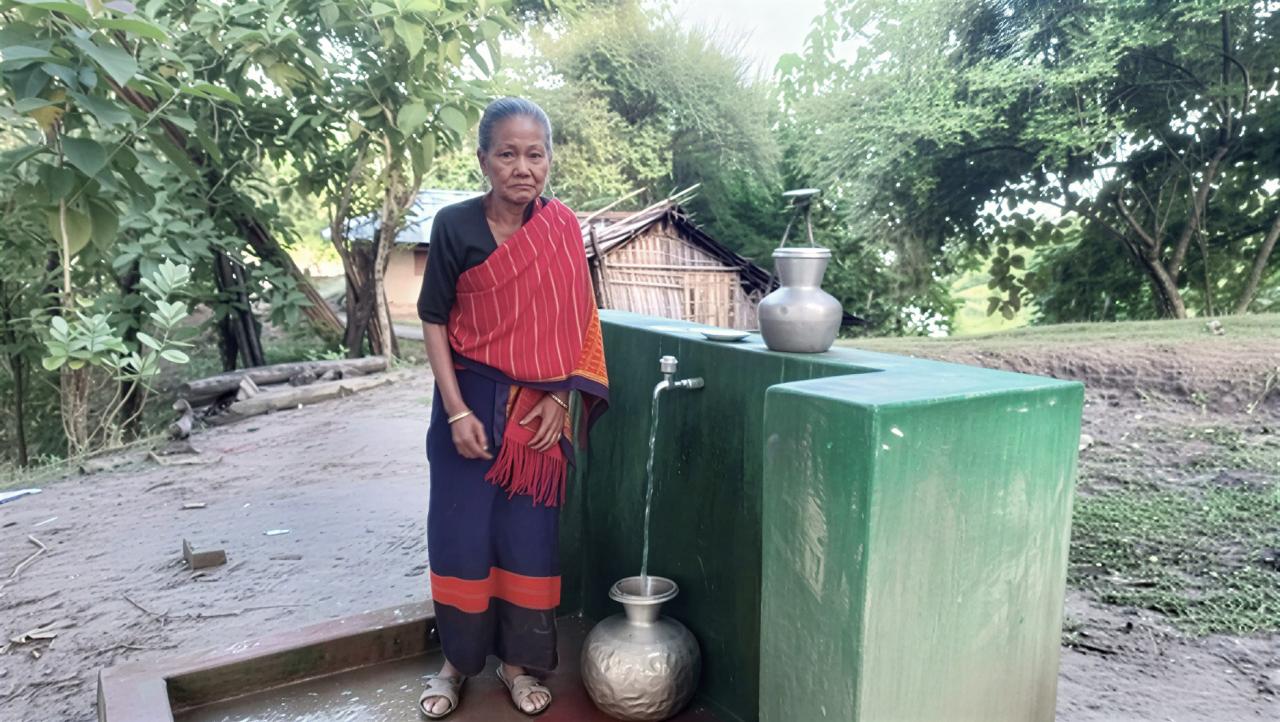
For most of her 84 years, Nayon Tara Chakma began each day with a climb. As the sun rose, she would set out from her mountain home in the remote Bangladesh village of Keronchhari, and scramble up two kilometres of uneven paths to fetch water for her household.
Happily, those arduous mornings are now a memory, as a locally-devised investment in a solar-powered water system has brought water to Chakma’s door. This basic but vital infrastructure investment is a locally-led, climate-resilient solution deployed by the Belaichhari Upazila – Upazila is an administrative unit in Bangladesh. A performance-based grant from the United Nations Capital Development Fund (UNCDF) provided the funds, using an approach developed as part of their signature climate adaptation initiative, the Local Climate Adaptive Living (LoCAL) Facility.
“Now that I have water in my yard, I am very happy,” said Chakma, who has lived her whole life in Keronchhari, which lies in hills of Belaichhari Upazila in Rangamati district of Bangladesh’s south-eastern mountains. “At this old age, I can get water in my own yard.”
The Keronchhari village in Rangamati district, like many of the over 1,000 Bangladeshi communities where UNCDF deploys climate finance to local authorities, has long been beyond the reach of most public services, including water and energy. For financial institutions, it is a place too risky, too costly and too remote to serve. Climate change has only made things harder. Streams that once supplied water have dried up, leaving women both young and old, like Chakma, to carry the burden of survival and divert their energies from other tasks that might generate income for their families.
Financing Locally-Led Adaptation
UNCDF is working with the government and partners in Bangladesh to ensure that the country’s hard-to-reach communities are not overlooked for investment in basic services that communities need to develop and thrive. Finance from the Swedish International Development Cooperation Agency (SIDA) and the Danish International Development Agency (DANIDA), combined with resources from the Government of Bangladesh, were channelled to Chakma’s local government in Belaichhari Upazila Parishad through the UNCDF-designed LoCAL Facility. Funding from the European Union supported activities until 2023.
Unlike traditional project funding, the LoCAL Facility channels performance-based grants directly through the budgets of subnational governments. They are designed to cover the additional costs of making infrastructure climate resilient, while also strengthening local governments’ capacity to plan, finance and deliver services. In Bangladesh, this activity falls under the LoGIC Programme, realised in partnership with the UN Development Programme (UNDP).
In total, 29 Upazilas have received LoCAL’s signature Performance Based Climate Resilience Grants (PBCRGs) worth a total of $10.92 million, realising over 1,000 climate adaptation investments, like the one in Ms Chakma’s community.
LoGIC is also comprised of a technical assistance component provided by UNDP and UNCDF to support vulnerable households and local governments’ climate adaptation planning. To date, some 2.2 million people have benefited from the results of UNCDF’s performance-based grants in Bangladesh.
UNCDF’s performance-based grants are channelled directly to the local government for them to invest in projects that are consistent with the Bangladesh Climate Change Strategy and Action Plan of 2009 and the National Adaptation Plan of 2023.
Solar Powered, Women Operated
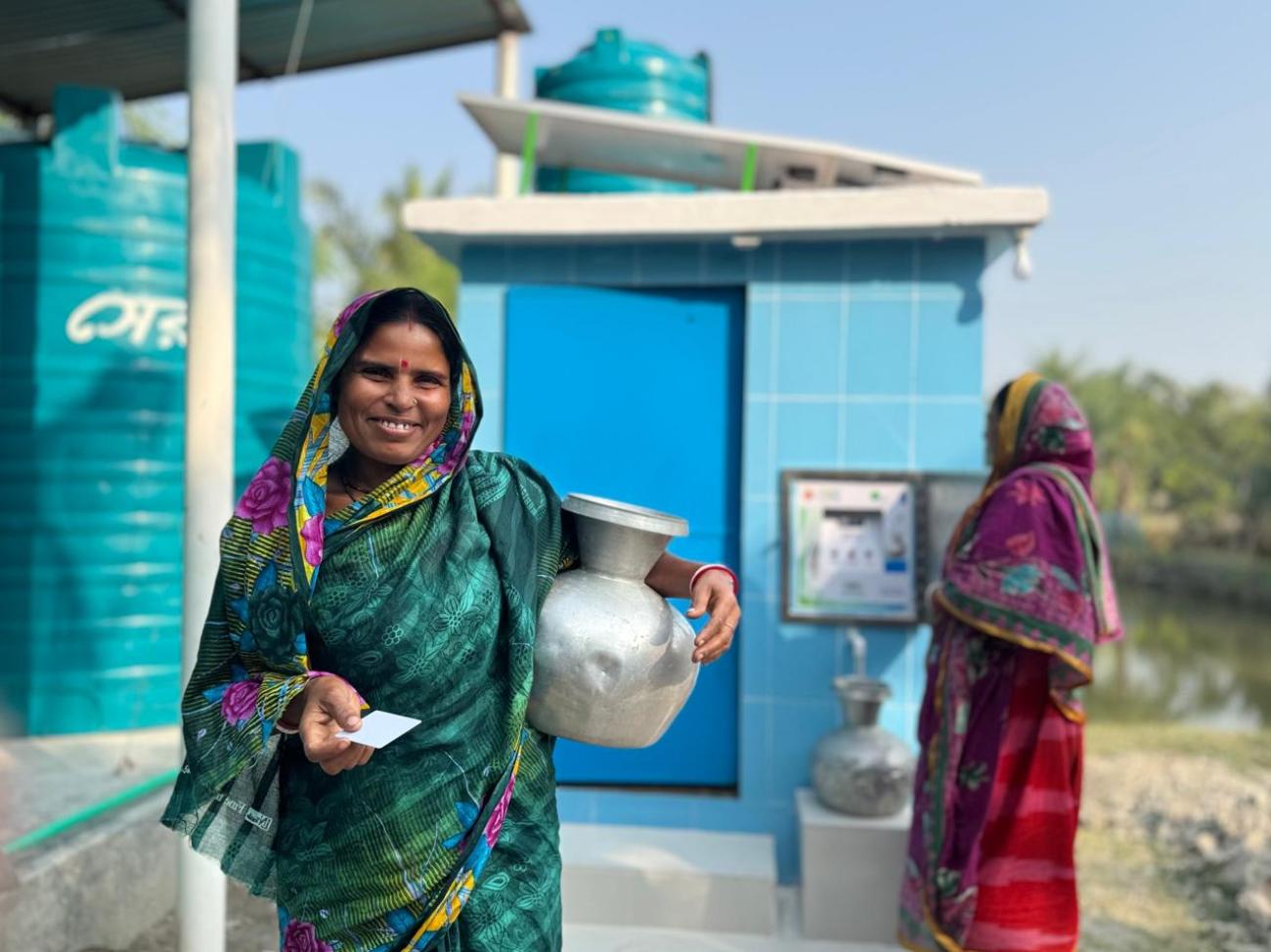
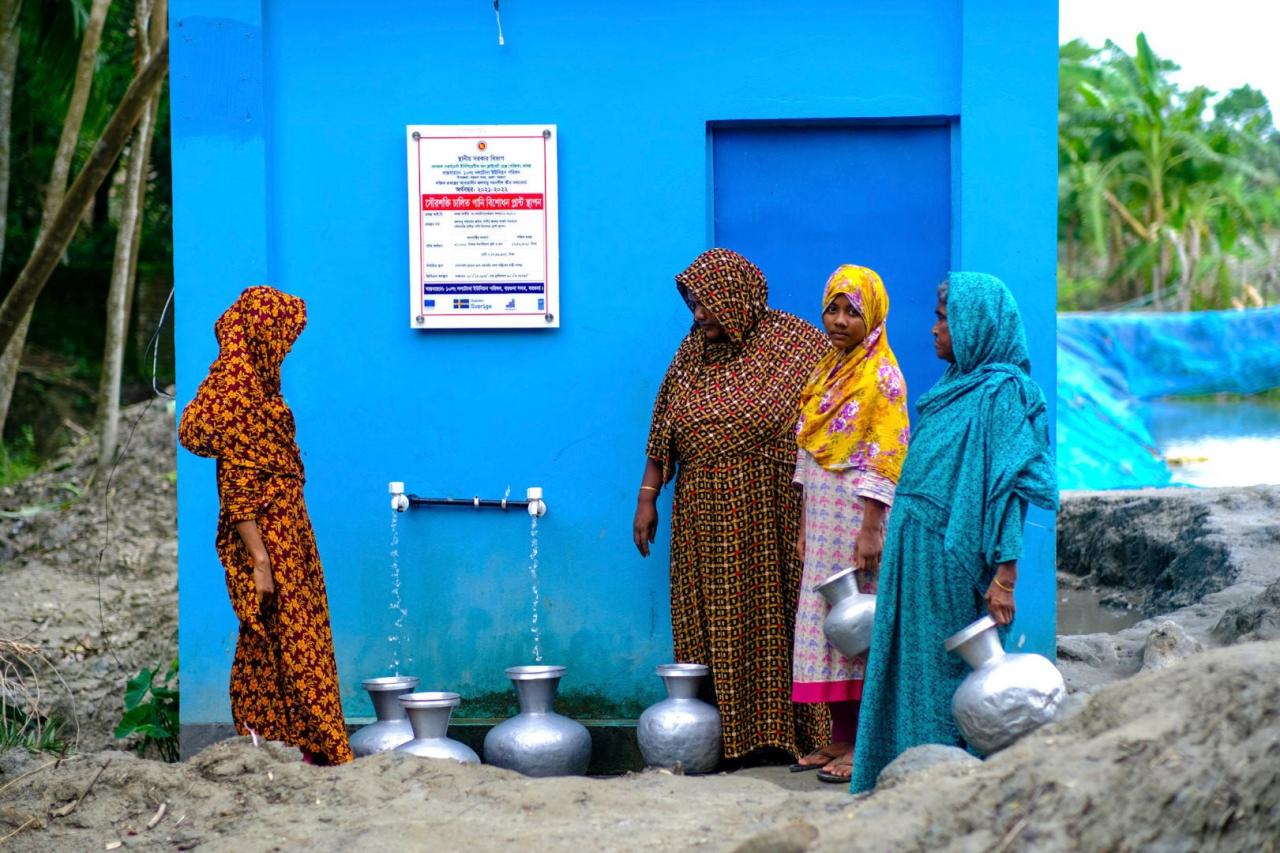
With a performance-based grant of $28,300, Ms Chakma’s Upazila contracted local companies to realise their planned water project. Local contractors drilled a 120-metre-deep borehole, installed a solar-powered pump to extract the water and installed a series of taps and water stands. Over 20 families in the village use the new water facilities and the local government has strengthened their procurement and management skills after completing this project with the guidance and oversight of UNCDF.
In addition, the local community contributed land for the construction of the water project in the heart of the village, worth some $6,000. As a result, villagers are invested in looking after and maintaining the facility. An Operation and Maintenance Committee composed of seven members (including three women) take care of the day-to-day operation such as the borehole, solar panels, pump and taps. The committee collects a monthly contribution from fellow villagers for their upkeep and maintenance.
Technical assistance is an accompanying component of any LoCAL investment, including the LoGIC Programme in Bangladesh. UNCDF ran a series of training sessions for local government officers on procurement and financial management, climate change awareness, how to identify a climate-resilient infrastructure need and guidance on developing Local Adaptation Plans of Action (LAPA), a local government's blueprint for climate action at the subnational level.
Good LAPAs are the basis for locally-led adaptation action in Bangladesh. Climate adaptation projects are selected directly from the priorities identified in the Upazila-level LAPA. With support from UNCDF, the Upazila Parishad local government and community members contributed to their Upazila’s LAPA through a series of inclusive consultations.
This bottom-up planning approach ensures that the PBCRG investments are not isolated interventions but are anchored in nationally-endorsed adaptation. The LAPA priorities are fully aligned with the National Adaptation Plan (NAP) 2023-2050, which emphasises locally-led adaptation, resilience of vulnerable groups and climate-resilient infrastructure as key national strategies. Therefore, PBCRG-funded schemes function as local delivery mechanisms of the NAP, translating national climate commitments into concrete, community-level actions.
A Tested Bottom-up Approach
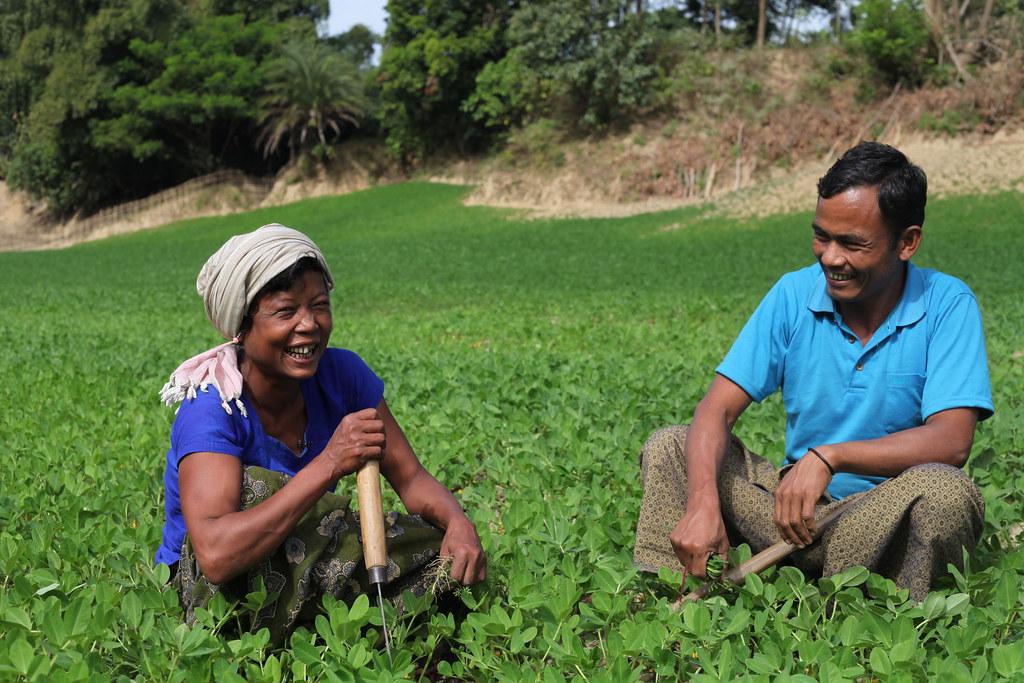
This investment demonstrates UNCDF’s effort in supporting local governments to access capital for resilience and local infrastructure services, and ultimately changing the lives of marginalised communities. The local government and the community have identified their most pressing climate adaptation need and together, they have developed and implemented a workable solution – the water facility. Long-term, this approach seeks to raise local level ambition and capacities to integrate climate adaptation into future planned investments.
In total, the LoGIC Programme has funding of $44.48 million from DANIDA, the European Union and SIDA. In addition, UNCDF and UNDP each contributed $500,000 for technical assistance, making a total allocation of $45.48 million.
And every big idea starts with individuals like Chakma and the 20 families in her community, who, with UNCDF, identified a pressing need, worked with their local government to take action and saw it through to deliver a sustainable solution.
This story was originally published by UNCDF. Learn more about the UN's work in Bangladesh on the UN team's website.