Bangladesh: Water, Water Everywhere, but not a Drop to Drink
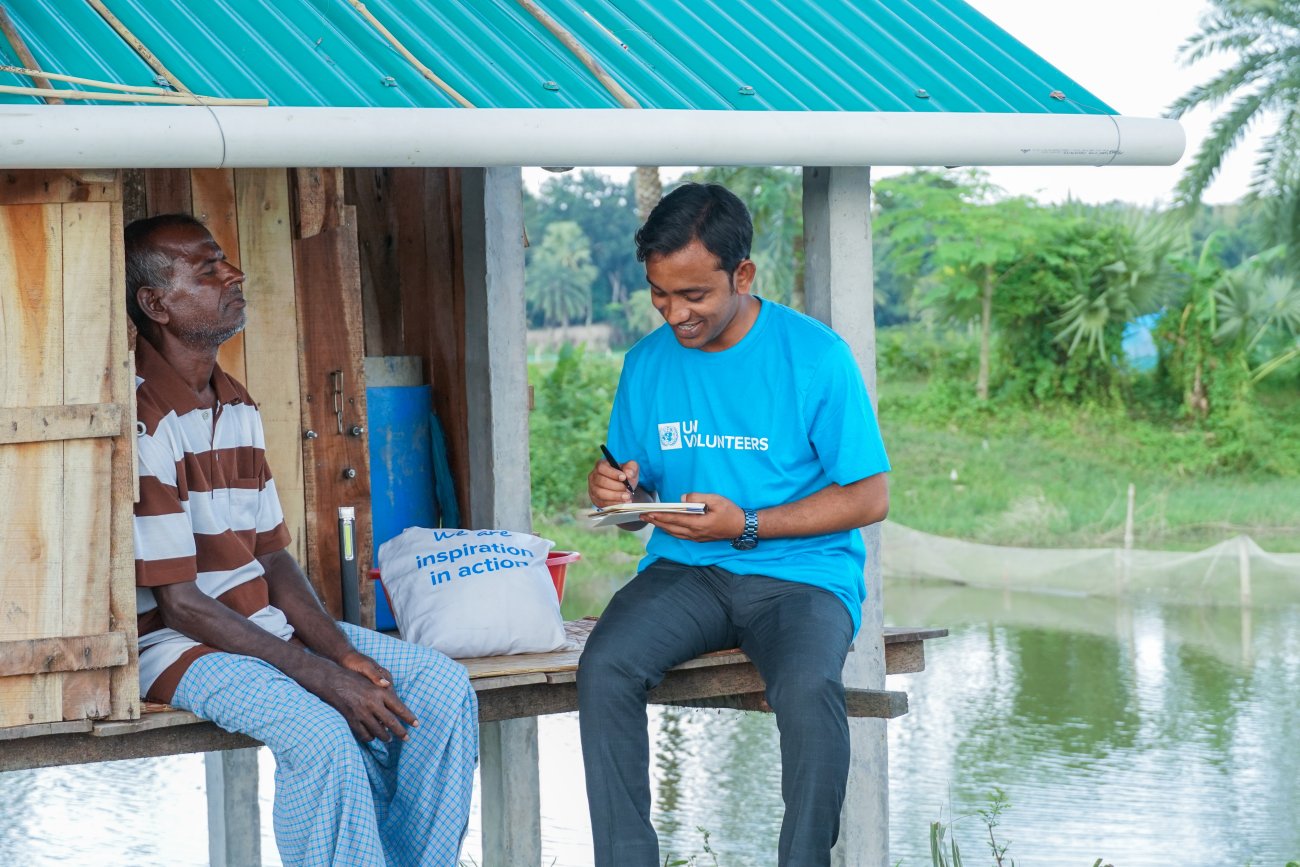
UN Volunteer engineers bring safe drinking water to coastal communities in Bangladesh
The midday sun hung heavy over the coastal village of Dacope in Bangladesh’s Khulna District as a group of engineers stood beside rows of rainwater tanks.
Just a few steps away, lakes and ponds stretch across the landscape, but saline intrusion has turned it into a landscape where safe drinking water has become a scarce commodity. For coastal communities, daily life is a constant struggle with climate change and coastal salinity.
For this village, deep in a remote coastal landscape, Samuel Taylor Coleridge's centuries-old words remain painfully relevant: "Water, water, everywhere, nor any drop to drink." Surrounded by water yet unable to benefit from it, the community stands as a stark example of what happens when the balance between people and nature breaks down.
The United Nations Development Programme (UNDP) has been working with the Government of Bangladesh to strengthen the capacities of coastal communities to cope with the impacts of climate change-induced salinity on livelihoods and water security. The programme is funded by the Green Climate Fund (GCF) and gives additional emphasis on gender-responsive adaptation.
While women in the village lead the programme on the ground, UN Volunteer engineers help make it work. They install and maintain rainwater harvesting systems, train local water committees and share the skills needed to keep the systems running. Their support helps communities secure a reliable source of safe water and manage it themselves.
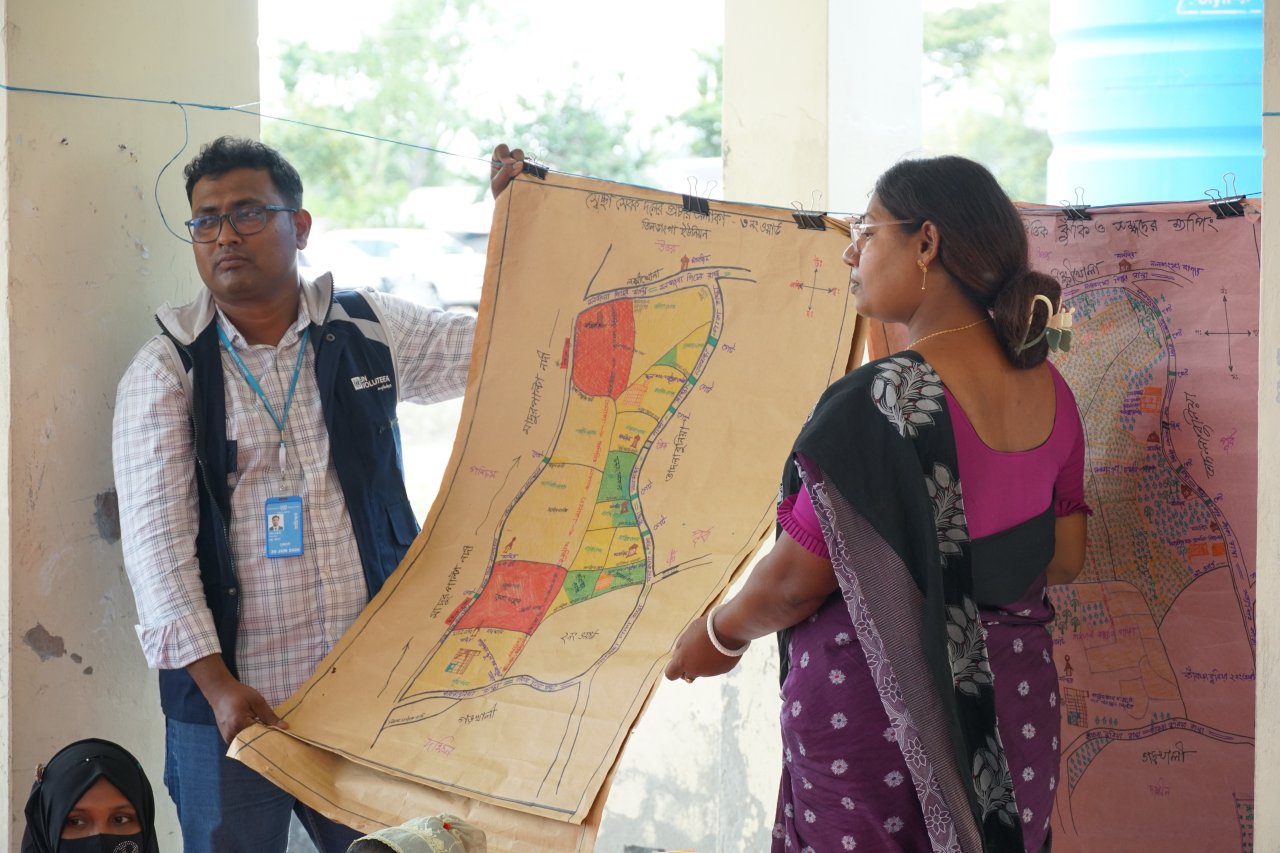
Md. Mahbubul Hasan Bhuiya, Sagor Kumar Sarker, Md. Saeed Hasan, Nazmus Sakib and Tanmoy Halder are the UN Volunteers working closely with coastal communities to address the fundamental need for access to safe drinking water, where salinity has become a major risk. They have been involved in the project since the beginning, including for site selection, assessment of community needs and selection of the most suitable locations for installation of rainwater filtration plants that will reach a maximum number of families.
During a field visit to Bangladesh, Christian Hainzl, Regional Manager for United Nations Volunteers (UNV) in Asia and the Pacific, sat down with the engineers on a hot summer day to understand how the programme expands access to safe drinking water through the use of rainwater harvesting systems. He equally wanted to know how UN Volunteers are building trust and strengthening community capacity to manage and maintain these solutions.
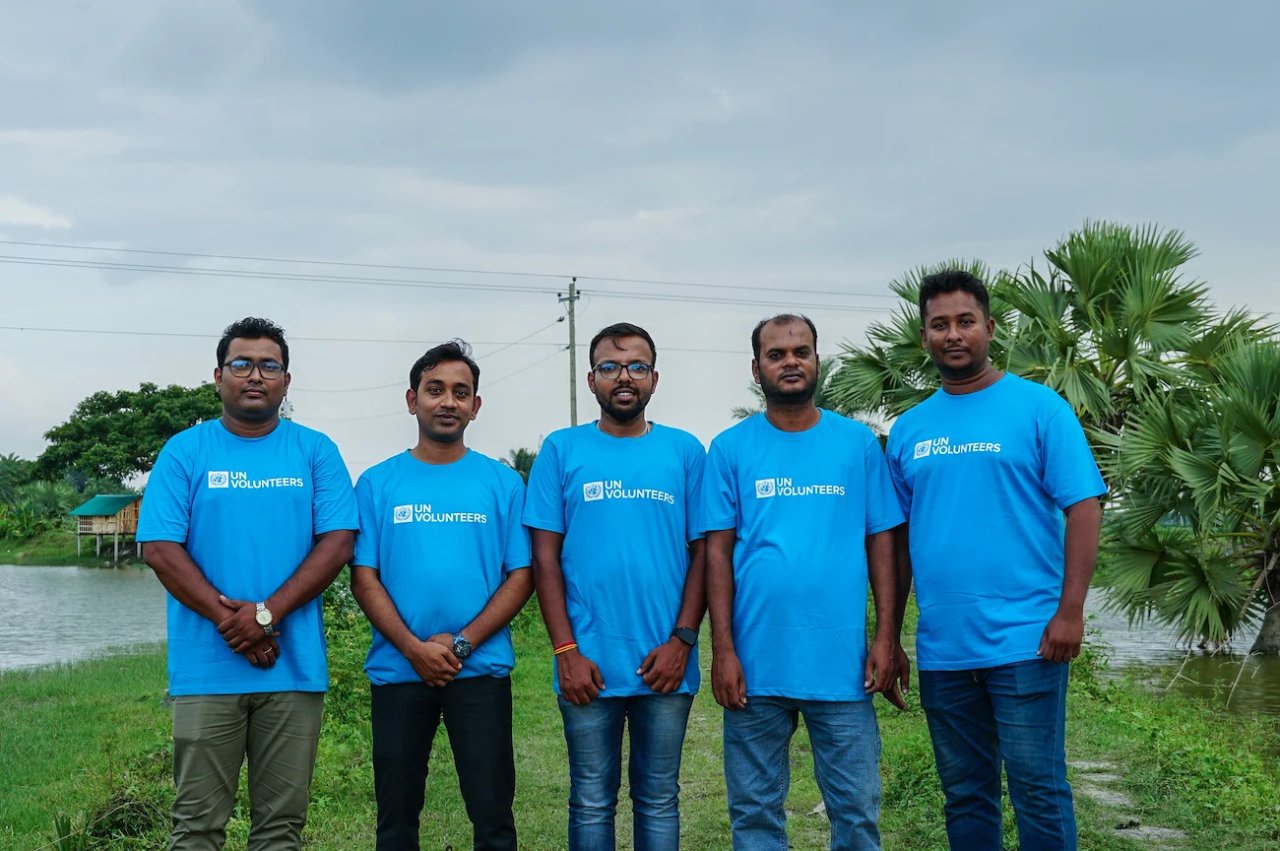
Christian Hainzl: As a UN Volunteer, what does your work involve and how are the interventions making a difference in people’s lives?
Sagor Kumar Sarker
Because of saline water issues, many families suffered from serious health risks and waterborne diseases. I engage with the communities to better understand their struggle, and now I can see firsthand how rainwater solutions can turn those challenges around.
While one force of nature threw them into hardship, another natural source is bringing relief. Being part of such solutions has deepened both my professional commitment and personal motivation.
I feel a deep sense of achievement seeing the rainwater harvesting systems saving time and improving child and maternal health while gradually also shifting community behaviour.
Md. Saeed Hasan
We can see people benefiting immediately from drinking preserved rainwater.
But to create a lasting impact, it requires raising awareness about harvesting practices.
We are making people aware of water hygiene and safe water use. Communities are not only adopting these practices themselves — they are also spreading the message to others.
One day, near a school, I saw children collecting and drinking pond water. I called them over and explained the risks. Then I spoke with the teachers so they could reinforce this message. After that, the children started using the filtered water from our system.
Najmus Sakib
As a Water, Sanitation and Hygiene (WASH) Engineer and as a UN Volunteer, I became a household name among the communities we are working for, and I feel inspired by my work. When we are sharing knowledge on safe water management, they carefully listen and are willing to follow, and later they volunteer to disseminate that knowledge further among their neighbours.
We are working to provide clean drinking water solutions through systems like rainwater harvesting and filtration.
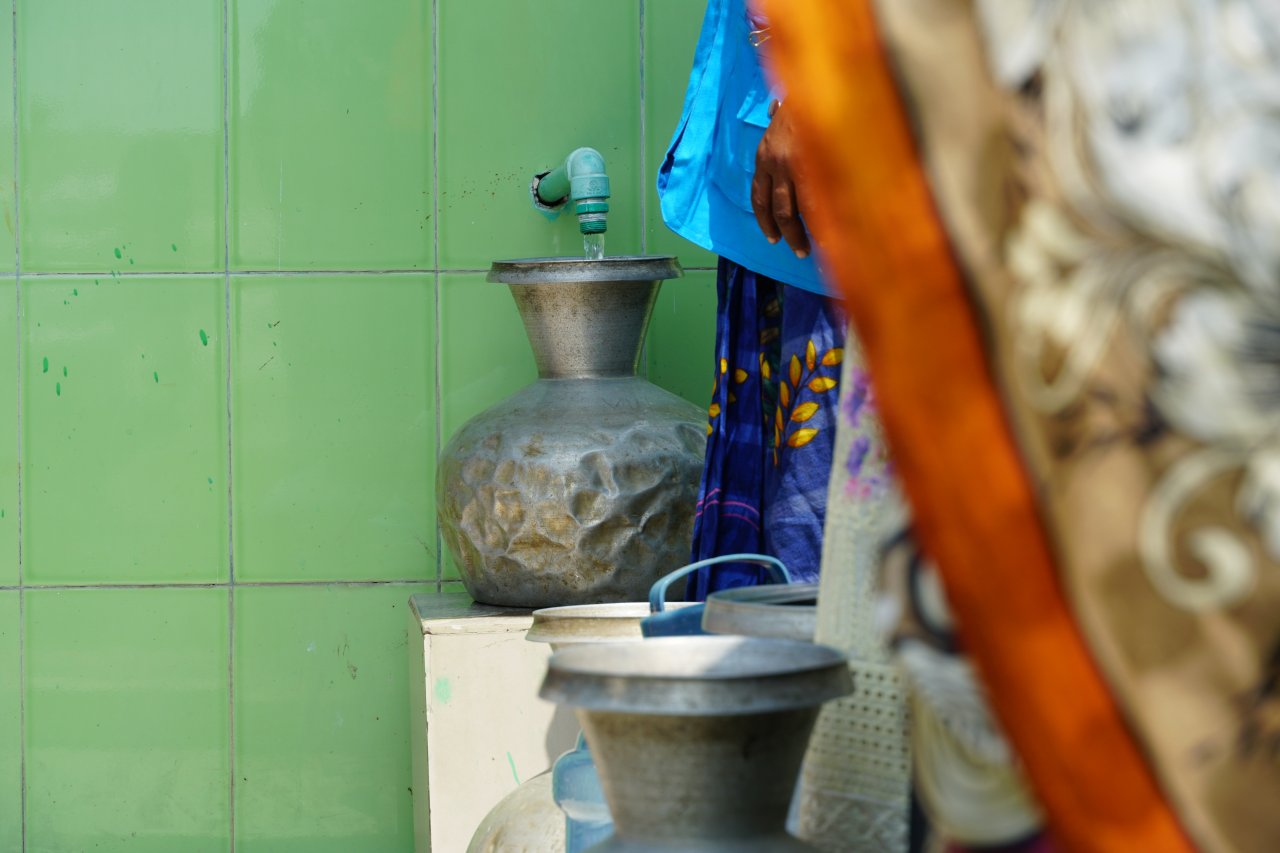
Before any supply reaches the community, we treat it using UV filtration to ensure it is safe. This is critical because people here are living with increasing salinity in their water sources due to climate change. The rainwater solutions give communities access to water they can safely drink.
Christian Hainzl: How have your technical skills and engineering knowledge contributed to this project?
Tanmoy Halder
Our work involves monitoring multiple water technologies such as rainwater harvesting systems, pond sand filters and arsenic iron removal plants.
In the field, we check whether systems are functioning properly, water quality is meeting safety standards and supply is consistent. We work closely with community-based organizations and female-led water user groups.
Every month, we meet and provide training on system maintenance, operations and financial management, ensuring systems continue to function long after direct project support ends. Water quality testing remains a core responsibility. We regularly test parameters like salinity, power of hydrogen (pH), total dissolved solids (TDS) and fecal contamination using field kits. If we identify any issue, we take immediate steps to resolve it. We have also successfully transmitted the basic technical know-how for critical maintenance to the communities.
Christian Hainzl: What are remaining challenges you see?
Md. Mahbubul Hasan Bhuiya
What we are doing here is very important — but the demand for safe drinking water is still far greater than what we can currently meet.
Many communities are still struggling for even a single reliable source of safe water. If such initiatives can grow, we can reach more communities and protect more lives.
For many families in Bangladesh’s coastal region, the search for safe drinking water is part of everyday life. In Dacope and other villages supported by UNDP, a sustainable solution is now making a difference. But across the coast, many communities still lack reliable access to safe water.
Climate change is exposing a harsh reality: communities cannot drink good intentions. They need practical solutions, reliable infrastructure and the knowledge to sustain them.
Across Asia and the Pacific, skilled UN Volunteer engineers are helping make that possible. But for every community that has found a solution, many others are still waiting. The challenge is clear: scale the solutions, and scale the volunteer expertise needed to bring them to life.
This story was originally published by UN Volunteers. Please visit the UN team's website for more information about the UN's work in Bangladesh.