'The Sustainable Development Agenda and its 17 Goals Work' – UN Deputy Secretary-General at the Launch of the SDGs Report 2026
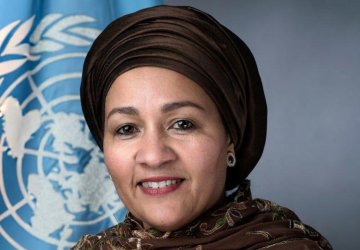
It is a pleasure to welcome you to the launch of The Sustainable Development Goals Report 2026 and to deliver these remarks on behalf of the Secretary-General.
A little over a decade ago, the world embarked on what is a bold, universal plan of action for people, planet, and prosperity with the 2030 Agenda for Sustainable Development, something that started in 1992 but came to be for the 2030 Agenda in 2015.
The SDGs are a social and environmental agenda – and they are an economic one. Every Goal, from health to education to clean energy, requires investment in productive, resilient and inclusive economies.
This report reveals the global picture, but we must not forget what it masks both: outstanding progress on sustainable development, as well as the places where sustainable development is beyond reach across regions and countries, and serious gaps across regions and countries.
Today, thanks to these findings, we can say two things with confidence: the Sustainable Development Agenda and its 17 Goals work.
They are delivering for people — but not fast enough, not evenly, not inclusively enough, and there are huge risk for reversals.
This year's report tells both stories.
First, let’s look at the story of progress for human dignity in all societies.
Since 2020, the global unemployment rate has seen a steady recovery, dropping to a record low of 4.9% in 2025.
In the last decade, nearly one billion more people can drink safe water.
There are increasing numbers of women in parliaments, in local governments, and on boards — nearing the 30 per cent target, at about 27 per cent — yet that increase is not translating into adequate policies that protect the rights of women and girls.
Nine people in ten now have access to electricity.
Children under five are surviving who a decade ago would not have — thirty-four countries have already met the target on under-five deaths.
AIDS is claiming a third fewer lives.
More people than ever have something to fall back on in terms of social protection.
And almost three in four people now have access to the internet, up from two in five in 2015, evolving rapidly.
These successes show us that real progress has not only been made, but made possible by political will, sustained investment, and international cooperation around a framework that is working — the SDGs.
We also know far more than we did in 2015 thanks to an important enabler: data. We measure more, we measure better, and with greater precision than ever before.
And what the data shows is that progress has not reached everyone, everywhere.
Those gaps now risk widening as the world faces serious headwinds.
And this is the other part of the story that this report tells.
The conflict in the Middle East has rippled through the global economy, disrupting maritime traffic, tying up energy, fertilizer, and food corridors, and driving up inflation.
In Gaza, war has undone 77 years of human development.
And for several years now, we have seen some of the hottest summers on record across the world, and we are fast approaching a temporary overshoot of the 1.5-degree limit.
And in the same year that military spending reached a record 2.9 trillion dollars, development assistance suffered its steepest fall on record while the annual SDG financing gap still stands at 4 trillion dollars a year.
These headwinds are exacerbating the progress being made and we are not meeting the demand of growing populations across the world.
That is the other story this report tells.
Only 36 per cent of assessable targets are on track or making moderate progress.
One young person in five is without a decent job and no place to learn, and among them are twice as many young women as young men.
Food security has improved only marginally, and the world is nowhere near ending hunger by 2030.
Decades of progress in reducing poverty and hunger can be reversed in a matter of months by a pandemic, a conflict, or a climate shock, as we have witnessed.
This report also counts 273 million children still out of school.
One woman in three who has lived with violence, a share that has barely moved in twenty years.
People with disabilities face discrimination at three times the rate of everyone else, and many are missing from the count altogether.
Let me be clear: this is not a failure of the Goals.
The Goals are sound, designed over four years, consulted, and inclusive. Where they have been backed by political will and resources, they deliver.
But we have a deepening crisis on the means of implementation.
Many countries are being asked to deliver on promises without the tools to keep them: financing gaps, debt pressures, weak cooperation, and unequal access to technology and data are slowing progress.
We need an urgent reform of the international financial architecture to better support developing countries.
That does include scaling up the lending capacity of the multilateral development banks and delivering meaningful debt relief to the least developed countries and Small Island Developing States.
Our frontier technologies – including artificial intelligence – can accelerate development, but only if they close divides rather than entrench them. And it is worth noting here that in 2015, this was not an issue that was being discussed. It was not on the agenda. There is not a Goal for that.
Digital public infrastructure, investment in connectivity and skills, and genuine technology transfer can put these tools in the hands of the many, and not just in the few.
The same is true of data: the Medellín Framework will strengthen the systems that tell us who is being reached and who is not.
Finally, three commitments underpin all of this:
Advancing gender equality as an enabler of every Goal; SDG 5 is the docking station for all the Goals.
Accelerating the transition to renewable energy; and we have seen opportunities for that. We have seen where energy security crisis from the war in Iran has given us an opportunity to scale up the renewable energy transition.
And putting peace first by investing in the instruments of development rather than ever-rising military spending.
None of today’s defining challenges can be solved by countries acting alone.
The evidence presented in this report makes one thing unmistakably clear: the Sustainable Development Goals remain achievable and possible if we choose to act together with greater urgency, scale, solidarity and resolve. But that choice must be made now.
The next four years are the time for a decisive final push to change the trajectory we are currently on.
Thank you.
These remarks were delivered by the UN Deputy Secretary-General at the launch of the Sustainable Development Goals Report 2026.