'The Energy Transition Must be Fair to People on the Frontlines' - UN Deputy Secretary-General at the High-Level Meeting on Critical Energy Transition Minerals
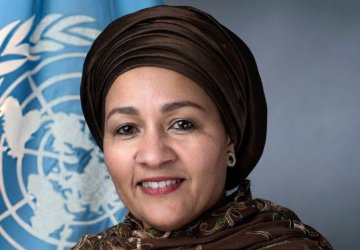
Thank you to the Ministers and distinguished participants for joining this first UN High-Level Meeting on critical energy transition minerals.
I also want to thank our co-organizers – UNCTAD, UNDP and UNEP – who are driving work on this vital agenda forward across the UN system together with our Climate Action Team and Sustainable Development Unit.
Advancing the energy transition – at speed and scale – has never been more urgent or vital.
The climate crisis is driving us deeper into planetary overshoot with rising temperatures pushing us closer to irreversible catastrophic tipping points.
At the same time, a global energy crisis is exposing the folly of a world still hooked on hydrocarbons, with limited access to cleaner fuels for the poor, and accelerated destruction of our natural systems, pushing ecosystems to the brink.
These crises have one common cause: fossil fuels.
And they demand the same answer: a fast, fair and inclusive transition to clean energy, along with shared benefits from decarbonization, and a surge in adaptation finance, resilient infrastructure and climate justice for those already facing climate harm. Renewable energy is now the cheapest source of new electricity in most parts of the world.
Wind and solar are now leading all new electricity demand growth worldwide.
The clean energy transition is now unstoppable – but it still needs to move much faster.
And it must be fair to the people on the frontlines – the communities whose land, labour and lives will carry this transition forward, and who must feel its rewards first.
At the heart of this transformation are the critical minerals – copper, lithium, nickel, cobalt, graphite, silicon and rare earths – the building blocks for electric vehicles, wind turbines, solar panels and grid-scale batteries that will power the clean energy future. Their strategic importance expands from digital and high-tech sectors, to manufacturing, health and defense.
Global demand for these minerals is expected to more than double by 2040, and with artificial intelligence and data centres expansion growing at breakneck speed, this real demand is expected to be much higher.
For resource-rich developing countries, these minerals represent a once-in-a-generation opportunity: to diversify economies, creating supply chain resilience, create decent jobs, boost revenues and accelerate progress towards achieving the Sustainable Development Goals.
But today’s reality tells a different story:
Developing countries which should be at the centre of the clean energy economy, remain trapped at its margins, relegated to exporters of raw materials while others reap the profits.
Mining communities which should be the first to benefit from extraction, processing and exporting, continue to face environmental harm, unsafe labour conditions and limited economic development.
Take Africa. The continent holds around 30 per cent of global critical mineral reserves. Yet it receives just 2 per cent of global clean energy investment, compromising infrastructure, skilled labour, environmental compliance and market access.
Increased competition for Africa’s precious mineral resources is also fueling instability, displacement and deadly conflict.
Excellencies,
We cannot allow the clean energy transition to reproduce the injustices of the past. But the reality is that as demand for critical minerals surges, so does the risk of exploitation.
To secure a truly just energy transition, we must act urgently on three fronts.
First, we must ensure the extraction of these minerals delivers fair, equitable, and sustainable outcomes for producing countries and communities.
The UN SG’s Panel on Critical Energy Transition Minerals told us how.
Its Guiding Principles and Actionable Recommendations are a blueprint for strengthening investment, protecting human rights and workforce transitions, enforcing environmental safeguards and ensuring value is created – and retained at source – in developing countries.
I welcome the growing commitment from governments, industry, international institutions and civil society to take forward the Panel’s work.
The priority must be strengthening governments’ capacity to negotiate equitable mining agreements, while expanding domestic processing and refining that drive local economies, and developing resilient global supply chains.
A UN Task Force is now coordinating system-wide action and supporting delivery on the ground in a number of countries.
Second, we must strengthen international collaboration and ensure equitable partnerships between producers and consumers.
To build resilient, transparent and diversified value chains that work for all countries, we need much stronger cooperation.
Bilateral deals that trade access for security, or resources for infrastructure, can risk exploitation, increase competition and undermine sovereignty.
So, we must adopt a rules-based approach, establishing frameworks that support developing countries through technology transfer, infrastructure investment and adherence to transparent due diligence and social and environmental standards.
We are committed to ensuring the United Nations continues to provide a platform for inclusive multilateral action – with the full participation of Indigenous Peoples, civil society, producing countries, workers, women and youth.
Third, full and unquestioned respect for human rights and environmental integrity at every stage.
Human rights must be protected, respected and fulfilled, including those of Indigenous Peoples, workers, children, youth, women, local communities and environmental and human rights defenders.
The environment and biodiversity must be safeguarded.
I call on all actors to strengthen governance by implementing robust transparency, traceability and anti-corruption measures across supply chains that protect the environment, human rights and Indigenous Peoples’ rights.
This is not only a moral imperative, but essential to meeting legal obligations.
Excellencies,
As demand for critical energy transition minerals surges, so must equitable governance, supply security, diversification, sustainability and investment in recycling and technology.
I look forward to hearing from you today on your plans to implement the UN SG Panel’s findings and strengthen international cooperation.
Together, let us turn the clean energy transition towards justice, resilience and equity.
Thank you.
These remarks were delivered at the High-Level Meeting on Critical Energy Transition Minerals.