At the global level, the UNSDG serves as a high-level forum for joint policy formation and decision-making. It guides, supports, tracks and oversees the coordination of development operations in 162 countries and territories.
The Deputy Secretary-General and Chair of the UNSDG on behalf of the UN Secretary-General convenes the UNSDG. The UNDP Administrator serves as Vice-Chair of the Group. The Group is composed of the executive heads of UNSDG member entities. The Development Coordination Office (DCO) serves as the Secretariat of the Group.

Who We Are
Photo: © Gabriela Vilchez/UN Volunteers Peru
United Nations Sustainable Development Group
Chair
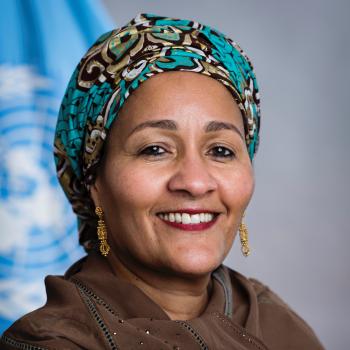
Amina J. Mohammed
Deputy Secretary-General
Ms. Amina J. Mohammed is the Deputy Secretary-General of the United Nations and Chair of the United Nations Sustainable Development Group.
Prior to her appointment, Ms. Mohammed served as Minister of Environment of the Federal Republic of Nigeria where she steered the country’s efforts on climate action and efforts to protect the natural environment.
Ms. Mohammed first joined the United Nations in 2012 as Special Adviser to former Secretary-General Ban Ki-moon with the responsibility for post-2015 development planning. She led the process that resulted in global agreement around the 2030 Agenda for Sustainable Development and the creation of the Sustainable Development Goals.
Ms. Mohammed began her career working on the design of schools and hospitals in Nigeria. She served as an advocate focused on increasing access to education and other social services, before moving into the public sector, where she rose to the position of adviser to four successive Presidents on poverty, public sector reform, and sustainable development.
Ms. Mohammed has been conferred several honorary doctorates and has served as an adjunct professor, lecturing on international development. The recipient of various global awards, Ms. Mohammed has served on numerous international advisory boards and panels. She is the mother of six children and has four grandchildren.
Vice-Chair
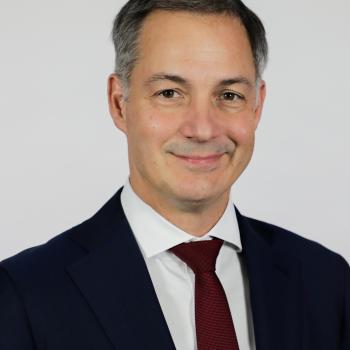
Alexander De Croo
UNDP Administrator
Alexander De Croo is the Administrator of the United Nations Development Programme. He started his official duties on 2 December 2025.
Mr. De Croo served as Prime Minister of Belgium from 2020 to 2025. His tenure included crisis management during the COVID-19 pandemic, the coordination of Belgium’s vaccination rollout and economic recovery strategies, and Belgium's presidency of the Council of the European Union during a period of considerable geopolitical strain.
Before becoming Prime Minister, Mr. De Croo served as Deputy Prime Minister from 2012 to 2020, as Minister of Development Cooperation and Digital Agenda from 2014 to 2020 and as Minister of Finance from 2018 to 2020. A steadfast advocate for strong international cooperation, he played a leading role in advancing international development, championed gender equality and digital innovation as drivers of progress, and actively supported humanitarian relief efforts in times of crisis.
Before entering public life, Mr. De Croo worked in the private sector as an entrepreneur and strategy advisor. His background as an entrepreneur shaped his focus on results, his pragmatic approach, and his openness to digital innovation.
Mr. De Croo holds a Master of Business Administration from the Kellogg School of Management at Northwestern University in Chicago and a degree in business engineering from the Solvay Brussels School of Economics and Management. He is fluent in English, French, and Dutch.
Secretariat
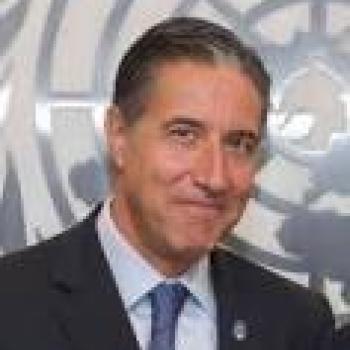
Oscar Fernández-Taranco
Assistant Secretary-General, Development Coordination Office
United Nations Secretary-General António Guterres appointed Mr. Oscar Fernández-Taranco of Argentina as Assistant Secretary-General for Development Coordination in November 2022.
He succeeds Robert Piper of Australia who was appointed as Special Adviser on Solutions to Internal Displacement.
Mr. Fernández-Taranco has over 30 years of experience in the United Nations System, having worked at Headquarters and in the field, managing development, political, peacebuilding, human rights and humanitarian operations in Africa, Latin America and the Caribbean, the Middle East, Asia and the Pacific and Europe.
He was Acting Assistant Secretary-General for Development Coordination since June 2022. Prior to this, he served as Special Adviser to the Secretary-General on Strengthening Programmatic Integration (2021-2022), Assistant Secretary-General for Peacebuilding Support in the Department of Political and Peacebuilding Affairs (2014-2021) and Assistant Secretary-General for Political Affairs in the then Department of Political Affairs (2009-2014). He also served as United Nations Resident Coordinator and United Nations Development Programme (UNDP) Resident Representative in the United Republic of Tanzania.
He previously served as Deputy Special Representative of the Administrator in the West Bank and Gaza Programme of Assistance to the Palestinian People (1994-1998), Deputy Assistant Administrator and Deputy Regional Director in the Regional Bureau for Arab States, UNDP (2001-2006), and Resident Representative, United Nations Resident Coordinator and Deputy Special Representative of the Secretary-General in Haiti (1998-2001). He also worked as Country Programme Officer with the United Nations Capital Development Fund and World Food Programme, covering countries in Africa and Latin America and the Caribbean. He started his career in the United Nations as a United Nations Volunteer in Benin.
Mr. Fernandez-Taranco was educated at Cornell University, where he studied economics, and at the Massachusetts Institute of Technology, studying urban regional economic planning. He speaks English, Spanish and French fluently.
Secretariat
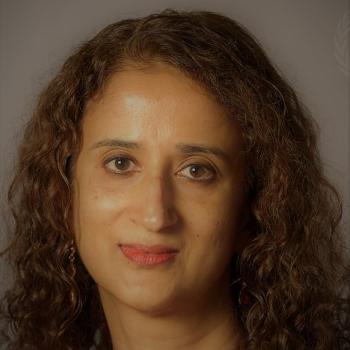
Rosemary Kalapurakal
Deputy Director, Development Coordination Office
Rosemary was appointed DCO Deputy Director in May 2021, after having served ad interim since December 2020, and as its Chief of Policy and Programme for two years. She brings to this role more than 20 years of diverse experience at the UN, spanning policy and programme work as well as strategic management and operations. Previously, she served as the 2030 Agenda Lead Advisor for UNDP in its Bureau for Policy and Programme Support, and as the Deputy Executive Coordinator of the United Nations Volunteers (UNV) Programme. She has worked for UNDP in numerous management and policy capacities at HQ and in the field, focused on sustainable development and inclusion. Rosemary holds a doctorate in Business and a master’s degree in economics.
UNSDG serves the global community

Photo: © UNDP Peru/Monica Suarez