

'Economic Governance Must Become More Inclusive, Representative, Equitable and Effective' - UN Secretary-General on Financing for Development
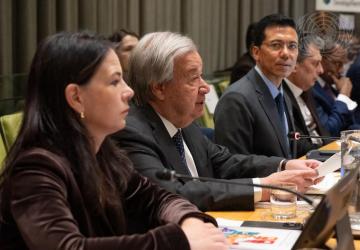
This Forum marks the first major gathering on financing for development since Member States adopted the Sevilla Commitment last year.
Sevilla was a moment of choice.
At a time when multilateralism is under multiple threats, Member States made a choice to stand together.
To overcome geopolitical divisions and chart a common course.
And to keep their promises to developing countries, which are starved of investment and drowning in debt.
Excellencies,
The task before us is steep.
We are living through a moment of profound turbulence.
Geopolitical divides are deepening.
Millions are caught in prolonged cycles of suffering, instability and displacement.
On top of these challenges, we face a major new shock: the conflict in the Middle East.
The violence and economic fallout are spilling across the region — and around the world.
We are seeing in real time the war’s impacts on the cost of fuel, fertiliser and food — as well as trade, transportation and tourism.
Government finances are stressed through rising energy costs, slower growth and currency depreciations — adding even more pressure to the debt burdens shouldered by developing countries.
Meanwhile, aid is declining, while military spending skyrockets.
Governments are spending more on the instruments of death than the foundations of development and peace.
Through it all, the global financial system is struggling to meet the needs of developing countries, and still reflects the economic and power structures of the past.
One by one, these shockwaves of instability and unrest are contaminating development prospects at a time when they’re needed most.
The financing gap to achieve the Sustainable Development Goals now stands at over $4 trillion annually — and growing fast.
Excellencies,
This Forum is an opportunity to scale up — and speed up — the finance required.
The Sevilla Platform for Action outlined 130 specific initiatives.
I see three broad areas of focus to bring them to life.
First — it’s time to rev-up the machinery of finance.
By increasing the assets housed in Multilateral Development Banks and fully leveraging them.
By making progress on blended finance platforms to combine public and private finance in new and expanded ways to support development.
And by mobilising domestic resources and channeling them to the areas of greatest need — including by tackling illicit financial flows.
I also call on all governments to reverse the upward spiral of unchecked military spending.
It’s time to stop this madness.
It is time to come together to end the wars that are pushing development out of reach.
Second — borrowing must work for, not against, developing countries.
When channeled towards investment, debt is an important ally of development.
The Sevilla Commitment outlined new steps to deliver bold debt action.
A borrowers’ platform to give developing countries a stronger voice in the debt architecture, which was launched last week;
New efforts to develop principles for responsible sovereign borrowing and lending;
A UN process to convene all stakeholders to work toward a development-oriented debt architecture while putting in place effective mechanisms for debt relief;
And a global effort to reimagine the credit ratings agencies which, in its current form, locks too many developing countries out of the borrowing tools they need.
Excellencies, distinguished delegates,
And third — we cannot relent in our calls to reform the international financial architecture.
The world has changed dramatically since these institutions were created.
Developing countries account for an ever-larger share of global output and trade.
South-South cooperation is expanding.
A more multipolar global economy is taking shape.
But our institutions and financing arrangements still largely reflect the economic and power structures of the past.
As a matter of justice — and common sense — we must ensure developing countries have the strongest possible participation across global financial institutions corresponding to the realities of today’s global economy.
Global economic governance must become more inclusive, representative, equitable and effective.
Excellencies, distinguished delegates,
Financing for development is about more than economic progress.
It is, first and foremost, about human progress.
It is about people being able to afford to eat.
Young people going to school.
Health systems that can reach every person.
Infrastructure that can support progress — from transportation systems, to internet access, water and sanitation, and basic electricity.
Social protections when times are hard.
And ladders of opportunity for all people.
Financing for development is also about restoring trust in what we can achieve by working in common effort, with common goals.
The Sevilla Commitment represents an important “win” for multilateralism.
It is up to us to keep pushing to translate the promises made in Sevilla into concrete progress for people and countries that need it most.
Thank you.